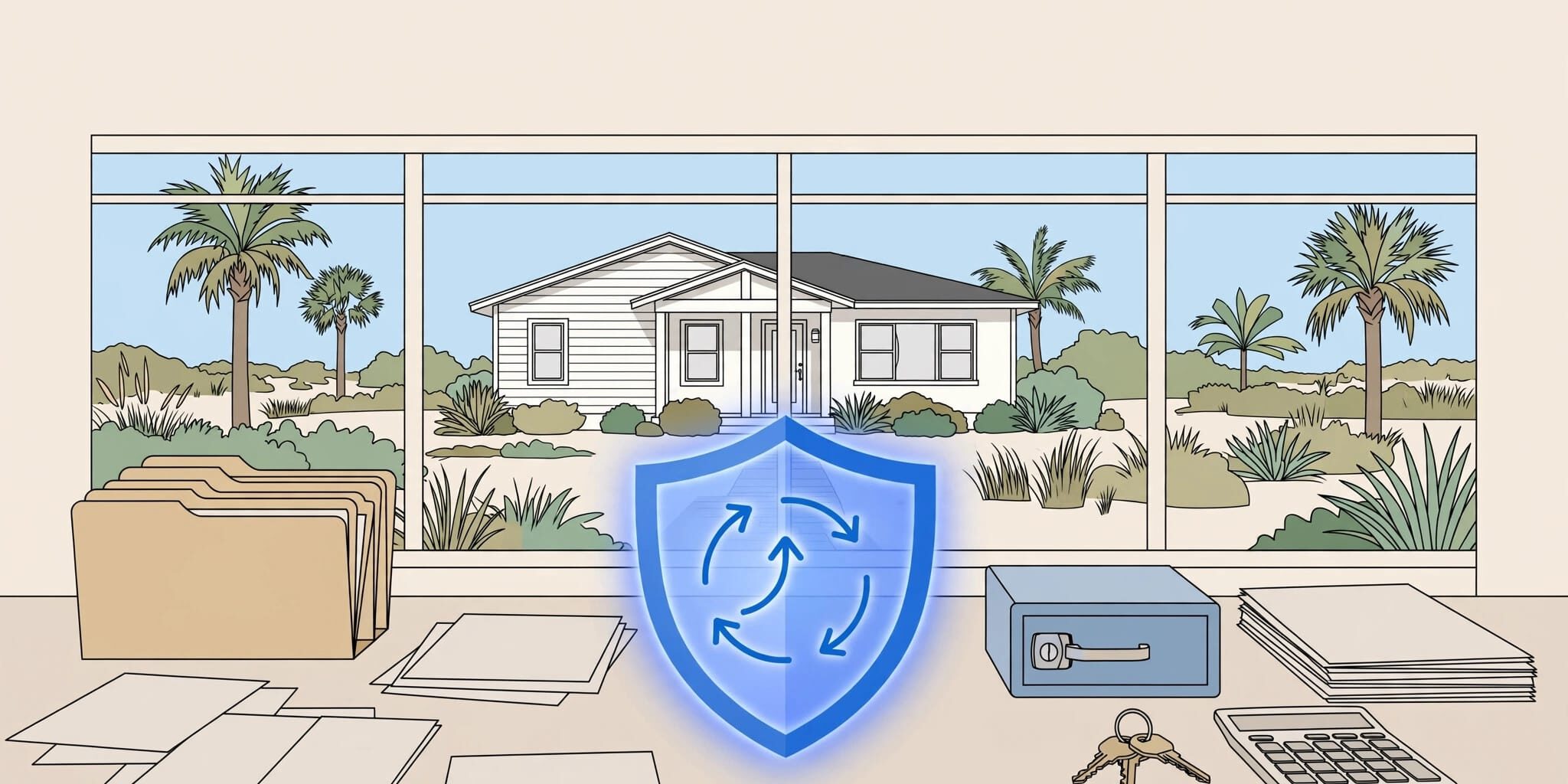
A rental can collect rent every month and still disappoint you when insurance, repairs, taxes, vacancy, and debt payments arrive. Florida rental recordkeeping gives you the real numbers behind the property, so you can protect cash flow instead of relying on a balance that looks healthy for one week.
For owners in Lehigh Acres, Cape Coral, Fort Myers, Punta Gorda, Port Charlotte, and nearby markets, clean records also make tax preparation, tenant questions, and maintenance decisions far less stressful. A dependable system starts before the first lease is signed.
Key Takeaways
- Keep separate records for every rental home, even when several properties share one owner or entity.
- Track rent, late fees, pet fees, deposits, repairs, improvements, taxes, insurance, and owner contributions in distinct categories.
- Treat security deposits differently from rental income, and follow Florida’s strict notice and return deadlines.
- Save invoices, photos, lease documents, statements, and tax records where you can retrieve them quickly.
- Review cash flow monthly, because a tax deduction can reduce taxable income without paying an actual bill.
- Bring in a CPA, bookkeeper, or property manager when the records take attention away from sound property decisions.
Build a Florida Rental Recordkeeping System Before Move-In
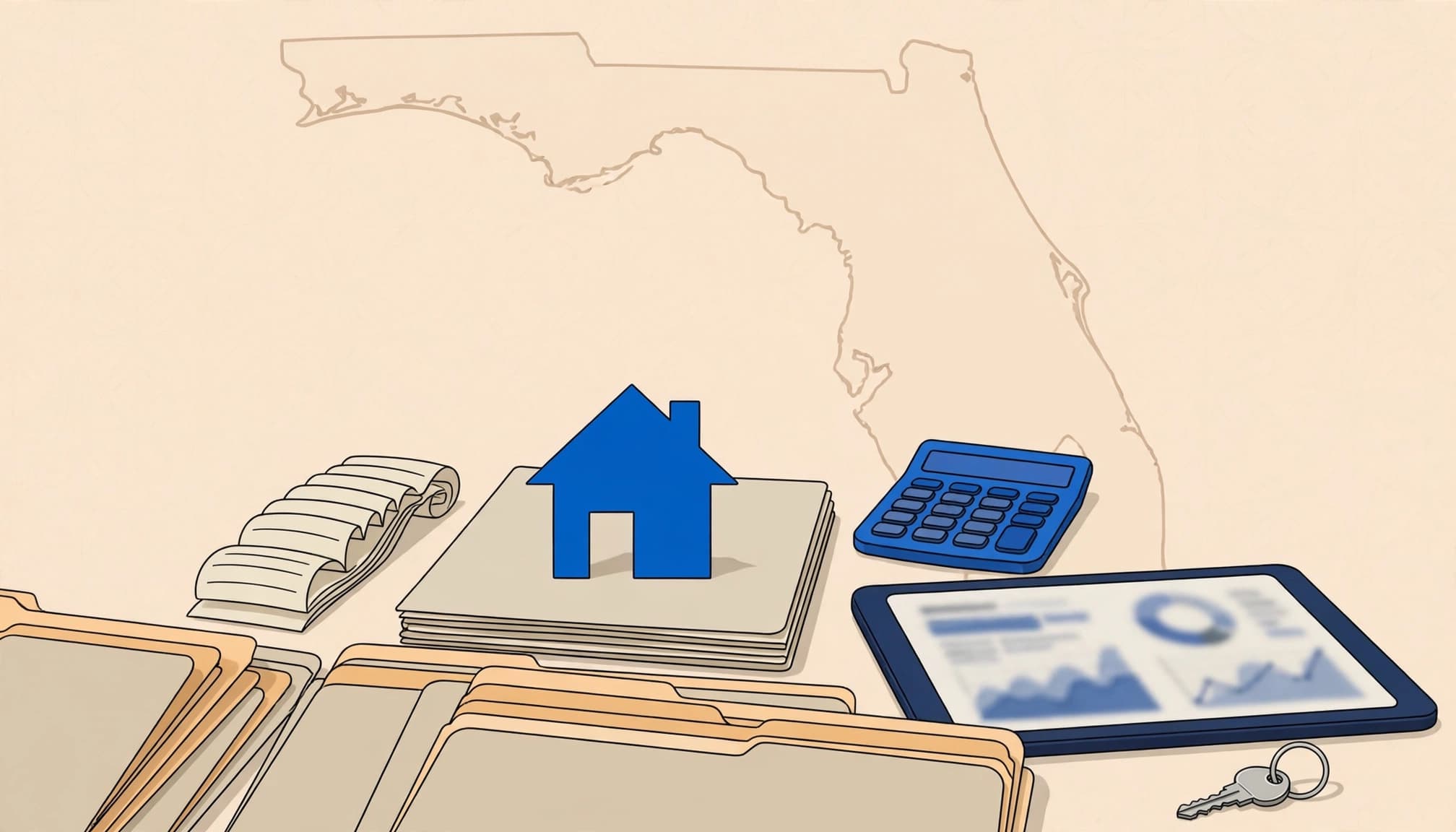
Good records should make it easy to answer a simple question: What did this specific property earn, spend, and need this month? We recommend setting up the structure before tenant payments and vendor invoices begin coming in.
For owners managing multiple investment properties, a consistent system is the foundation of rental property accounting and real estate bookkeeping. It also makes each property’s financial performance easier to review.
Separate Personal and Business Finances
Open a bank account used only for rental activity. If you own multiple homes, a dedicated portfolio account paired with property-level ledgers is often practical. Some owners also prefer a separate operating account for each home.
Create a property-level chart of accounts for rent, deposits, repairs, improvements, taxes, insurance, and owner activity. Property management software can connect bank feeds, ledgers, documents, and tenant activity, but it doesn’t replace your review.
Don’t pay a contractor from a personal card and plan to sort it out later. When you do pay personally, record the amount as an owner contribution and keep the invoice. The same rule applies when you take money out for yourself. Record it as an owner draw, not as a property expense.
This separation gives you a clearer view of your finances. It also makes monthly reconciliations much easier when your CPA requests documents.
Give Every Property Its Own File
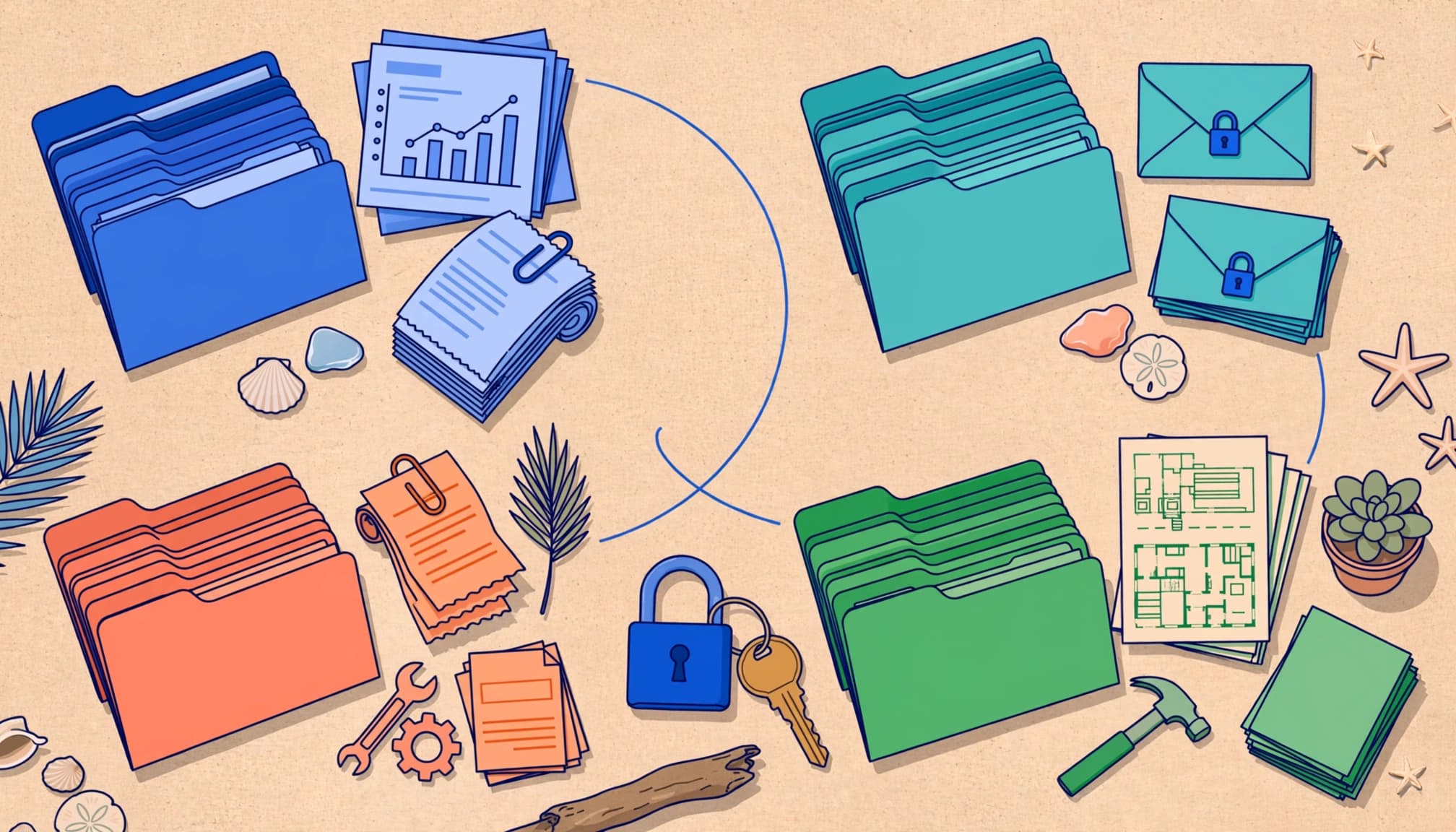
Create a digital folder for each address, then use the same subfolders for every home. Keep the lease, renewals, tenant ledger, inspection reports, management statements, insurance declarations, tax bills, vendor invoices, warranties, and photos together.
For furnished or vacation rentals, add an inventory of furniture, appliances, and equipment. Record the purchase date, cost, location, and replacement details. Consistent files support tax season preparation and reduce the time needed to answer a CPA’s questions.
A simple file structure prevents one home’s pool repair or insurance payment from disappearing into another property’s records.
Reconcile Before the Month Gets Away From You
At the end of each month, complete monthly reconciliations by comparing bank activity with the rent ledger, receipts, invoices, and owner statement. Confirm that every deposit has a source and every withdrawal has support.
We also review unpaid rent, open work orders, security deposit balances, upcoming renewals, reserves, and maintenance and repairs during this step. This routine supports cash flow monitoring and can reveal changes in the property’s financial performance before they become larger issues.
Track Every Dollar That Comes Into the Property
Rental income tracking is more than entering the monthly rent amount. You need a record that explains what was collected, when it arrived, and what it covered.
Record Rent and Other Tenant Charges Separately
Your income ledger should distinguish base rent from late fees, pet rent, parking, utility reimbursements, returned-payment fees, and other lease-based charges. Keep the signed lease and amendments beside the ledger, especially when rent changes at renewal.
Online rent collection reduces manual entry, but it still needs review. Match payment-processor or portal activity to cleared bank deposits, including failed, returned, or partially applied payments. A payment marked received isn’t the same as cleared funds.
For a managed home, request statements that show gross income, management fees, vendor charges, reserve activity, and the amount distributed to you. These details make rental property accounting easier to verify month after month. Trust accounting records can also help separate and reconcile funds held on behalf of tenants or owners, without requiring every Florida owner to use one particular account structure.
Keep Security Deposits Out of Operating Income
A security deposit generally isn’t rental income when you expect to return it. Under IRS Publication 527, the tax treatment can change when you apply it to rent, damages, or another tenant obligation.
Keep a dated internal deposit ledger showing the amount received, where it is held, any interest terms, and the eventual return or claim. This is a sound control for every owner, even though it is not a separate statewide ledger requirement.
A security deposit can protect the home, but it should never be used to make an operating account look stronger than it is.
Categorize Expenses for Better Cash Flow and Tax Preparation
Expense categorization shows where the property is working and where costs are rising. It also gives your tax professional the support needed to review possible deductions accurately.
Track Normal Operating Expenses
Use consistent categories across your properties. Common operating expenses include property taxes, insurance, mortgage interest, HOA dues, management fees, advertising, utilities, lawn care, pool service, cleaning, pest control, maintenance, repairs, and professional fees.
Southwest Florida properties may need their own lines for flood coverage, hurricane deductibles, irrigation, roof work, seawall maintenance, dock upkeep, and storm preparation. These costs can be substantial, so don’t bury them under a general “miscellaneous” category.
Property tax bills deserve their own review. Florida has no personal state income tax, but county property taxes still affect your monthly cash flow. Review property tax deductions, assessments, and any post-purchase reassessment with your tax professional.
Separate Repairs From Capital Expenses
A repair generally keeps the property in normal working condition. Replacing a broken faucet, patching drywall, or fixing an appliance may be a current expense, depending on the facts.
An improvement usually adds value, adapts the property to a new use, or restores a major component. A new roof, major renovation, or substantial HVAC replacement may be treated as capital expenses and recovered through depreciation rather than deducted immediately. Confirm the treatment with your tax professional.
Keep permits, contracts, invoices, before-and-after photos, and payment records for larger projects. The IRS discusses repairs, improvements, and property depreciation in its rental real estate guidance.
Depreciation may reduce taxable rental income, but it doesn’t create cash in the bank. We keep tax deductions separate from operating cash flow, debt service, and reserve planning.
Follow Florida Security Deposit Deadlines
Security deposits need more than a receipt and a bank entry. Each deposit needs a dated timeline, complete tenant-file documentation, holding information, and proof that required notices were sent or delivered.
Document How the Deposit Is Held
Florida Statutes Section 83.49 requires landlords to disclose in the lease or within 30 days after receiving a security deposit or advance rent where the funds are held, including the depository details or bond arrangement.
Trust accounting can help separately identify tenant funds, balances, interest where applicable, and disbursements. Florida doesn’t impose one universal format on every residential landlord, so owners should verify the applicable holding method and lease disclosures.
If the holding method or location changes, the tenant must receive notice within 30 days. Keep the notice, lease, deposit receipt, delivery record, and related communication in the tenant file.
Build the Move-Out File Early
The statutory clock doesn’t wait for a contractor to finish a repair. If no claim is made, the deposit generally must be returned within 15 days after termination. If you intend to make a claim, written notice generally must be sent within 30 days by certified mail to the tenant’s last known mailing address, or by email when permitted.
Keep move-in and move-out reports, dated photos, invoices, estimates, correspondence, and proof of certified-mail or permitted-email delivery. Normal wear and tear differs from tenant-caused damage, and documentation matters when a claim is questioned.
Store Documents Digitally and Keep Them Long Enough
Paper receipts fade, so use digital document organization from the start. Scan records as they arrive and name searchable PDFs by property, date, vendor, and purpose. Store them in consistent folders with secure cloud backups.
Save the Documents That Support the Numbers
Your financial records should include leases, rent ledgers, bank statements, invoices, receipts, insurance records, TRIM notices, property tax bills, mileage logs, closing statements, and depreciation schedules. Preserve records for furniture, appliances, and equipment, too.
The IRS recommends records that help you monitor the property, prepare financial statements, and identify the source of every receipt. Its rental real estate recordkeeping guidance is a helpful starting point.
Use a Sensible Retention Plan
There is no confirmed statewide Florida rule requiring every residential landlord to retain all financial records for one universal period. Federal tax retention rules differ from Florida-specific landlord obligations and remain important for tax compliance.
Many ordinary tax-support records should be retained for at least three years after filing. Some situations may call for six years, including a substantial understatement of income. Keep documents supporting property basis, improvements, and depreciation for as long as you own the property, and longer when needed to support a future sale.
Back up files in secure cloud storage and limit access to tenant information. A secure tenant portal can preserve payment history, notices, maintenance updates, statements, and document delivery records. Use access controls and limited permissions to protect tenant privacy.
Treat Vacation Rentals as Their Own Accounting System
A short-term rental can produce strong gross income during a busy season, but it has more moving parts than a traditional annual lease. Guest stays, owner stays, blocked dates, cleaning costs, platform fees, collected taxes, refunds, and cancellations require a separate short-term rental bookkeeping workflow.
Track Personal Use and Guest Activity
For mixed-use homes, record every owner day, guest stay, maintenance block, rental-availability period, platform payout, and refund as they occur. Short-term rental bookkeeping shouldn’t rely on estimates made after the year ends.
Personal use can affect federal tax treatment, so keep activity records current. Preserve statements from Airbnb, Vrbo, Booking.com, or any direct-booking system with bank deposits and tax reports. If a platform collects a charge, still confirm how it appears in your records.
Account for Transient Taxes by County
Qualifying rentals of living or sleeping accommodations may be subject to Florida’s 6% state sales tax, applicable discretionary surtax, and county tourist development taxes. Review Florida sales tax on rental accommodations and current Florida local-option taxes for your property’s location.
Rates, registration, collection, and filing duties can vary by location. Tax compliance may require separate registration, collection, filing, and payment steps. Keep taxes collected from guests separate from rental revenue, and record every filing and payment confirmation.
Know When Professional Support Makes Sense
One rental home with stable tenants may be manageable with a disciplined monthly routine. A larger portfolio, furnished rentals, storm repairs, owner use, or frequent turnovers can quickly justify professional property management.
A CPA Helps With Tax Decisions
Talk with a certified public accountant when you buy a property or complete major improvements. Discuss short-term renting, personal use, sale preparation, or quarterly estimated tax payments.
These events can affect basis, depreciation, deductions, and future tax treatment. This is a records and tax-planning discussion, not investment advice.
A CPA should receive organized records, not a box of receipts in March. Clear files keep the conversation focused on decisions that fit your goals.
Property Management Keeps Records Connected
Professional property management can bring rent collection, inspections, maintenance coordination, security-deposit handling, tenant communication, and financial statements into one dependable process. It can also connect owner statements with supporting documents.
Before hiring a provider, ask how it handles Florida deposit deadlines, record access, privacy, reconciliations, and audit-ready documentation. It is especially helpful when you live out of town or own homes across several Florida markets.
If you need help building a practical accounting process for a Southwest Florida rental, get help with rental property accounting through Best Investing Realty. Clear owner reporting and supporting documents make every decision easier to review.
Frequently Asked Questions
What are the most important Florida rental expenses to track?
Track property taxes, insurance, mortgage interest, HOA dues, utilities, management fees, maintenance, repairs, professional fees, vacancy costs, and reserves. Add property-specific items such as pool service, flood insurance, hurricane deductibles, irrigation, seawall work, or furnished-unit replacements where they apply.
Does Florida charge state income tax on rental income?
Florida has no personal state income tax. Rental activity is still generally reported on your federal return, and owners must also plan for county property taxes. Short-term rentals can create additional sales and tourist tax obligations.
Should every property have separate records?
Yes. Separate financial records for each address give you a more reliable view of income, expenses, repairs, and cash flow. They also make it easier to compare performance and prepare tax information.
Can a security deposit be counted as rent when received?
Usually not, if you expect to return it. It may become income when it is applied to unpaid rent, damage, or another tenant obligation. Keep a separate deposit record until the tenancy and final accounting are complete.
Final Thoughts
A strong Florida rental recordkeeping system is built on real numbers, complete documents, and a consistent monthly review. It protects you during tax season, tenant turnover, insurance claims, and decisions about repairs or future sales.
The goal is not paperwork for its own sake. Reliable records show whether the property can carry its true costs and support your long-term investment plans.