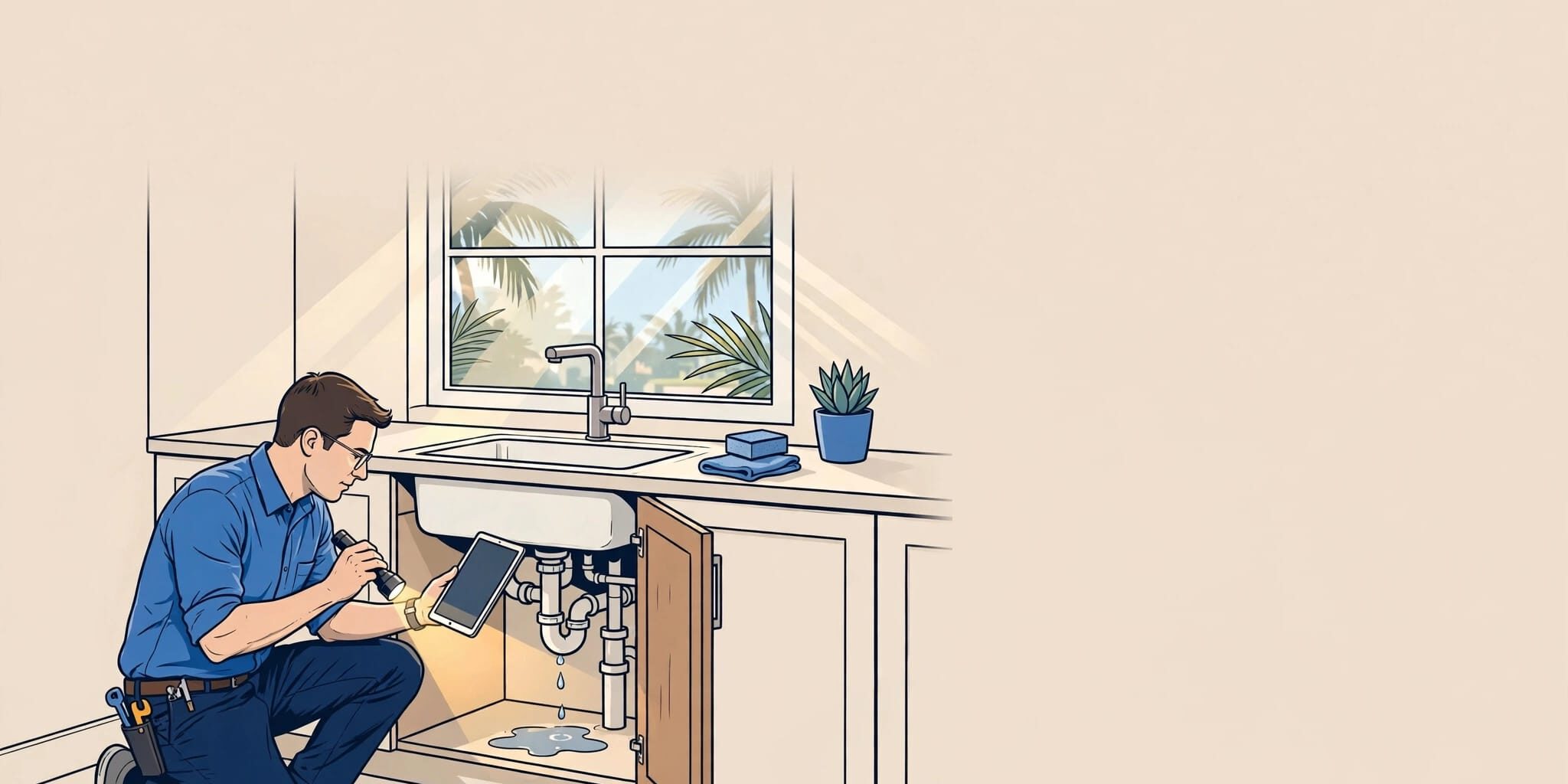
A small leak under a sink can become a costly repair when nobody sees it for six months. Inspections of Florida rental homes help protect the home, support tenant safety, and create records that can prevent disputes later.
The goal isn’t to make residents feel watched. It’s to use a practical inspection interval, follow lawful entry procedures, and keep consistent records. Here’s the schedule we recommend for Florida rental homes.

Key Takeaways
- Florida generally does not require a fixed recurring inspection schedule, but two routine inspections per year are a practical recommendation for most long-term rentals.
- Document the property’s condition at move-in and move-out with written reports, photographs, dates, and repair notes to help distinguish ordinary wear and tear from documented damage.
- Provide reasonable advance notice for planned inspections, use reasonable hours, follow the lease, and respect a tenant’s privacy and access rights under Florida law.
- Use a consistent checklist covering safety devices, water, HVAC, electrical concerns, exteriors, pools, pests, and lease-related conditions.
- Keep inspection reports, maintenance records, vendor communications, and storm-preparation documentation together as part of the property’s management plan.
Build a Clear Inspection Schedule for Florida Rentals
Florida law generally doesn’t establish a fixed recurring inspection schedule. The right frequency depends on the home’s age, condition, systems, amenities, lease length, and the tenant’s documented maintenance history. The rental agreement or lease agreement may also include access or inspection terms.
For most long-term rentals, we find that two routine inspections per year strike the right balance. This schedule is a practical recommendation, not a fixed set of legal requirements. It gives owners a clear view of the home’s condition without creating unnecessary disruption for tenants.
Start With Detailed Move-In Inspections
A detailed move-in inspection should document the initial property condition and existing defects. Photograph each room, appliances, flooring, doors, windows, safety devices, and outdoor areas before the resident receives keys.
Both parties should receive the written condition report. If a tenant reports an existing stain, cracked tile, or damaged screen, add it to the record promptly.
These records help distinguish ordinary wear and tear from documented changes. They can support a security deposit dispute, but the report alone doesn’t determine legal responsibility. For deposit notices and claims, consult Florida Statute 83.49 and the Florida Legislature’s official Chapter 83 materials.
During move-out inspections, compare the closing report with the move-in record. This can help identify property damage and estimate repair costs, but not every difference is chargeable to the tenant.
Plan Mid-Lease Inspections Every Six Months
A six-month rental property inspection can reveal slow leaks and concerns in HVAC systems. These routine inspections can also flag pest activity, loose railings, and unauthorized alterations before they become expensive problems.
Older homes, pool homes, and properties with irrigation systems may need more frequent attention. Newer homes in good condition may only need a mid-lease walkthrough and a renewal inspection.
A routine inspection should focus on the property, not the tenant’s lifestyle. Document condition issues, maintenance needs, and lease concerns with the same consistent process every time.
Respectful Entry for Florida Rental Inspections
Tenant privacy matters because inspection authority isn’t unlimited. The lease agreement, reasonable access procedures, and tenant rights shape lawful entry. Landlords can’t use access to harass or pressure a resident.
Under Florida Statute 83.53, a tenant can’t unreasonably withhold consent when a landlord has a lawful reason to enter, such as inspecting the premises or completing necessary work. The statute also prohibits landlords from abusing access rights or using entry to harass a tenant.
Give Notice and Choose Reasonable Hours
For repairs, Florida law defines reasonable notice as at least 24 hours before entry. It defines reasonable hours as between 7:30 a.m. and 8:00 p.m.
For planned routine inspections, schedule the visit under the lease and communicate it in advance. Give reasonable notice and use 24-hour written notice as a consistent best practice. This written notice approach is prudent, but the lease, applicable housing code, nature of entry, and other legal requirements still matter.
Your notice should state:
- The date and expected arrival window.
- The reason for entry, such as a condition inspection or service visit.
- The names of the property manager, owner, or vendor expected to enter.
- A phone number for rescheduling questions or access concerns.
A genuine emergency is different. Active water intrusion, fire, or a serious safety threat may justify immediate access when reasonably necessary to protect people or the property. A nonemergency convenience visit should wait for proper notice and coordination.
Handle Refusal Without Escalating the Problem
A tenant may have a legitimate scheduling conflict. Offer another reasonable time and keep the conversation in writing.
If a tenant repeatedly refuses a properly noticed, valid inspection, document the notices and responses, but don’t assume the refusal is a lease violation. Don’t enter by force, change locks, or retaliate. For a recurring dispute, consult a Florida attorney before taking the next step and review Florida’s landlord-tenant statutes.
Use an Inspection Checklist for Every Rental Property Inspection
An inspection checklist keeps every walkthrough consistent. We use the same core categories for every home, then add items that fit the property’s features.
Check Safety, Water, and Major Systems
Test smoke alarms and test or document carbon monoxide detectors where installed or required by applicable code. Look for tripping hazards, damaged handrails, loose outlets, visible concerns in electrical systems, and moisture or water stains around ceilings or windows.
A visual walkthrough isn’t a substitute for a licensed evaluation of serious electrical or structural concerns. Run faucets, inspect under sinks, check toilets for leaks, and look behind appliances when access allows.
In Southwest Florida, HVAC systems deserve close attention, especially during extreme heat. Check thermostat operation, filters, drains, visible duct areas, leaks, and air-conditioning performance. Document service needs for HVAC systems and electrical systems, then schedule a qualified vendor before minor concerns become emergencies.
Review Exterior and Lease-Related Concerns
Walk the exterior for damaged screens, drainage issues, roof debris, broken fencing, trip hazards, and irrigation problems. These observations aren’t a formal housing code inspection. Check pool barriers, gates, and equipment where applicable, then note signs that may warrant pest control, including activity, droppings, or moisture-related conditions.
Also note unauthorized pets, unapproved occupants, smoking damage, or alterations that may affect lease compliance. Document property condition, visible concerns affecting structural integrity, and any property damage factually, without making accusations. Compare findings with open maintenance requests, and use photos, dates, and repair notes rather than opinions.
For condominiums and HOA communities, review association entry rules and tenant approval requirements before scheduling vendors. Association rules may affect access, vendor scheduling, and approvals, but they don’t replace Florida landlord-tenant law.
Add Seasonal Checks Before Florida Storm Season
Florida rentals need a seasonal maintenance plan, but storm preparation does not require a mandated recurring inspection interval. Before hurricane season, check gutters, roof areas visible from the ground, exterior doors, window seals, drainage paths, trees, fencing, and loose outdoor items for conditions affecting structural integrity.
Confirm residents know how to report a leak, power-related safety issue, or storm damage promptly. Review the Florida Division of Emergency Management’s hurricane-preparedness materials, and keep vendor contacts, insurance information, flood-risk details, and current property photos in the file.
Storm preparation is also an ownership cost. We include maintenance, insurance deductibles, flood exposure, lawn care, expected repair costs, and reserves in the same annual model as management expenses. Preventive maintenance and storm documentation can help protect property value, while a rental that looks profitable at the advertised rent can change quickly after a major repair.
Make Inspections Part of the Property Management Plan
For investors, inspections are one part of a documented property management operating system. It connects reports, photographs, invoices, vendor records, and tenant communications while helping protect the building and preserve rental income.
Ask how the provider conducts each rental property inspection, including the frequency and scope of its inspection checklist. Ask how photos are shared and how quickly the manager responds to maintenance requests. Also ask who approves vendors and whether visits are included in the management fee.
Owners should confirm that the manager’s procedures align with the written rental agreement. A report can document observations relevant to lease compliance, but it doesn’t prove a violation by itself.
Consistent records show changes in property condition, help compare repair trends, and identify recurring issues, including concerns involving electrical systems. They support fair move-out accounting by distinguishing ordinary wear and tear from documented damage. Records alone don’t resolve every dispute.
Frequently Asked Questions
How often can a Florida landlord inspect a rental property?
Florida generally does not establish a fixed recurring inspection interval. For most long-term rentals, two routine inspections per year provide a practical balance between protecting the property and respecting tenant privacy.
How much notice is required for a Florida rental inspection?
For repairs, Florida law defines reasonable notice as at least 24 hours before entry and reasonable hours as between 7:30 a.m. and 8:00 p.m. For routine inspections, landlords should follow the lease, give reasonable advance notice, and use 24-hour written notice as a consistent best practice.
Can a tenant refuse a properly noticed inspection?
A tenant cannot unreasonably withhold consent when a landlord has a lawful reason to enter, such as inspecting the premises or completing necessary work. If a tenant has a legitimate scheduling conflict, offer another reasonable time, document the communication, and do not enter by force or retaliate.
What should a landlord document during an inspection?
Use a consistent checklist and record safety concerns, leaks, HVAC conditions, exterior issues, visible property damage, maintenance needs, and lease-related observations. Photos, dates, written reports, and repair notes are more useful than opinions or accusations.
Are Florida landlords allowed to enter without notice during an emergency?
A genuine emergency, such as active water intrusion, fire, or a serious safety threat, may justify immediate access when reasonably necessary to protect people or the property. A nonemergency convenience visit should wait for proper notice and coordination.
Final Thoughts
Florida generally doesn’t set a fixed interval for routine inspections. Owners should choose a practical schedule, follow the lease, provide appropriate notice, respect privacy, and respond to emergencies lawfully.
Move-in records and move-out inspections help document property damage, distinguish ordinary wear and tear, and clarify security deposit questions for both parties.
A Florida rental home needs more than rent collection to remain a dependable investment. It needs consistent care, clear notice, reliable records, and respect for tenant rights.
This article provides general information, not legal advice. Owners and tenants should consult a Florida attorney about a specific entry, notice, retaliation, lease, or deposit dispute.
If you need help building an inspection and maintenance plan for a Southwest Florida rental, contact a Southwest Florida property manager to discuss your property and investment goals with a Southwest Florida property management team.