A tenant move-out starts two clocks during tenant turnover: preparing your rental property and handling the security deposit. A dependable Florida rental turnover checklist helps protect your investment without letting repairs, paperwork, or vacancy days get ahead of you.
We recommend a clear sequence that puts documentation first, followed by repairs, cleaning, and leasing. Start with the deadlines, then organize the work around the home’s condition and your next tenant’s arrival.
Key Takeaways
A well-managed turnover protects your property, but it also respects the departing tenant’s rights.
- Return the security deposit within 15 days if no claim is needed, or send the required claim notice within 30 days.
- Complete inspections and repairs before final cleaning, while maintaining humidity control throughout the vacancy.
- Price against comparable rentals, apply consistent screening standards, and document the home’s condition before releasing keys.
We treat these responsibilities as parallel workstreams. A delayed contractor shouldn’t become a missed legal deadline.
Florida Rental Turnover Checklist: Set the Timeline
How long should your turnover take? It depends on the home’s condition, contractor availability, and leasing demand. We recommend this working schedule rather than treating every home as a mandatory four-week project.
Use this timeline and maintenance checklist to assign responsibilities and identify delays early.
| Timing | Priority | Completion Record |
|---|---|---|
| Before Move-Out | Review the lease agreement, confirm plans and access arrangements, and check vendor availability. A lease renewal is different from a turnover. | Written communications and preliminary schedule. |
| Days 1 Through 3 | Confirm lawful possession, inspect the home, photograph its condition, and document needed work. | Move-out report and repair estimates. |
| Days 4 Through 6 | Deep-clean the home and record any cleaning issues that need follow-up. | Cleaning checklist and completion notes. |
| Days 7 Through 10 | Complete repairs, safety checks, and pest and moisture control. | Vendor reports and invoices. |
| Days 11 Through 14 | Confirm utilities and systems are ready, inspect completed work, and prepare the home for move-in. Photograph the listing. | Final condition report and marketing photos. |
| As Applicants Arrive | Conduct showings, screen consistently, and prepare the lease. | Application records and signed documents. |
Keep utilities active when needed for repairs, testing, or humidity control. The deposit deadlines run separately from this schedule and don’t change based on the work sequence. Larger repairs may take longer, while a well-maintained home may be ready sooner.
If belongings remain, confirm the applicable abandoned-property process before arranging disposal. An empty-looking home doesn’t automatically establish lawful possession.
Handle the Security Deposit Separately
Calendar the Return or Claim Notice
Under Florida’s security deposit requirements, Florida Statute 83.49 requires you to return the deposit and any required interest within 15 days if you make no claim. Track this legal deadline from when the tenancy ends and the tenant vacates and delivers possession.
If you intend to claim any portion of the security deposit, Florida Statute 83.49 requires written notice within 30 days. Send it by certified mail to the tenant’s last known mailing address, or by qualifying email under Section 83.505 if the tenant has provided the required consent.
Include the amount, reason, and required statutory language. An informal text message or repair invoice isn’t a substitute for the required notice.
Support Each Deduction With Records
As a best practice, keep the lease agreement, move-in report, move-out photographs, ledger, estimates, invoices, and delivery proof together. These records should explain both the cost and the tenant’s responsibility.
Normal wear and tear isn’t tenant damage. Routine repainting, aging equipment, and storm-related repairs shouldn’t automatically become deductions.
The tenant has 15 days after receiving the claim notice to object in writing. Without a timely objection, deduct the supported claim and remit any remaining balance within 30 days after the notice. A timely objection makes the disputed amount contested and calls for careful review.
A contractor’s delay doesn’t extend the notice deadline, even when the damage is documented.
Inspect First, Then Complete Florida Make-Ready Repairs
Document Condition Before Work Begins
Your move-out inspection should capture every room, appliance, floor, door, window, and outdoor area before vendors change anything. After the inspection, compare findings with the move-in report and open maintenance requests.
Record leaks, pest activity, broken fixtures, missing items, and visible damage factually. Avoid assumptions about who caused a problem.
Next, approve a written scope and complete work in order: major repairs, drywall patching, painting, then final cleaning. Test repaired appliances and plumbing before cleaners arrive.
Check maintenance obligations against the lease agreement, local codes, and Florida’s landlord-tenant law. Section 83.51 addresses maintenance and smoke-detection duties, with requirements that depend on property type and applicable agreements.
Keep Humidity Under Control
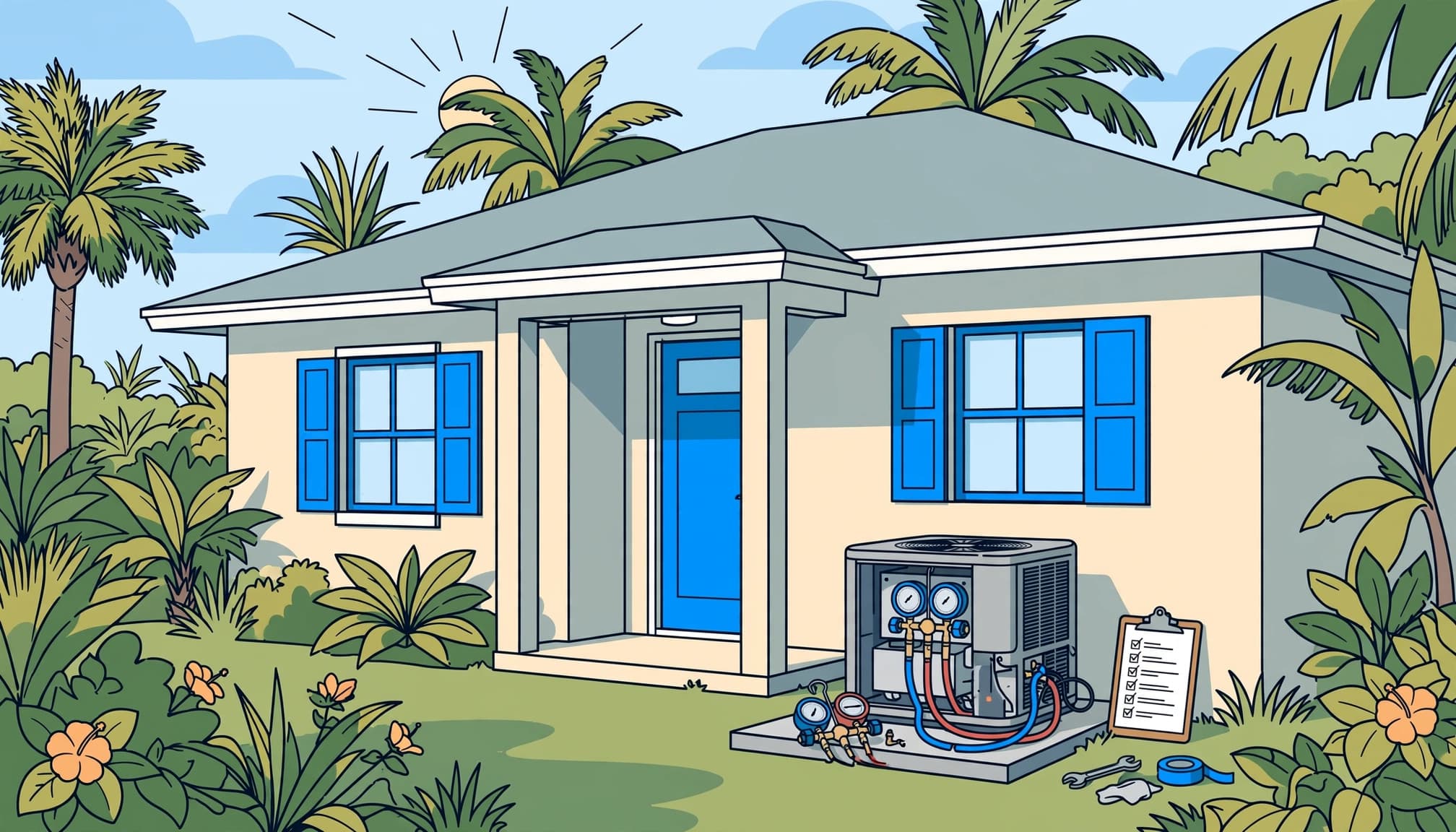
A vacant Florida home still needs moisture management. We recommend keeping electricity active and maintaining appropriate cooling or dehumidification instead of shutting the system off.
The Florida Department of Health recommends indoor humidity below 60%, with below 50% preferred for controlling mold growth and dust mites.
Check air filters, condensate drainage, cooling performance, and signs of water near the indoor unit. Use a humidity monitor rather than assuming a thermostat setting is enough.
Inspect gutters, drainage, window seals, and lanai screens. Coastal properties also deserve attention to corroded hardware. Humidity control is prudent maintenance, not a blanket statutory requirement to run AC continuously.
Complete the Room-by-Room Cleaning Checklist
Kitchens and Bathrooms
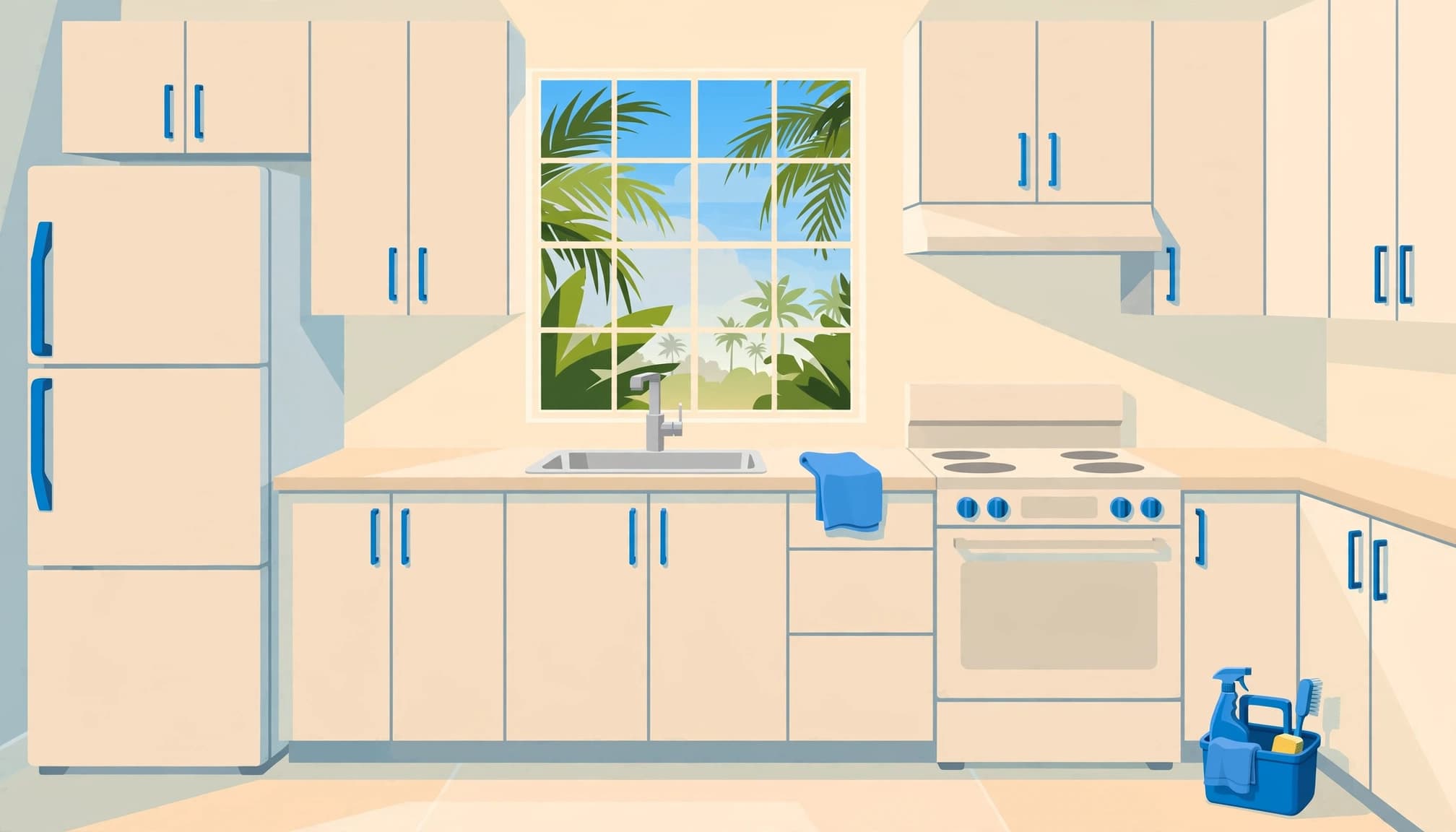
Use this cleaning checklist to make the kitchen ready for daily use, not simply presentable in photographs. Clean cabinet interiors, drawer tracks, counters, backsplashes, sinks, and appliance surfaces.
Remove food residue inside the refrigerator and oven, clean accessible filters as directed by the manufacturer, and check dishwasher seals. Run faucets and inspect underneath sinks afterward.
In bathrooms, remove soap residue, clean toilets and exhaust grilles, and inspect caulk and grout. Repair failed seals before the final clean. Persistent staining or odors may signal a moisture problem that cleaning alone won’t resolve.
We recommend photographing these areas after work is complete. If buildup remains after routine work, consider professional cleaning.
Living Areas and Exterior Spaces
Clean floors using methods appropriate for each material, then address baseboards, light fixtures, ceiling fans, closets, and window tracks. Check blinds, screens, doors, and cabinet hardware for proper operation.
Test smoke detectors and check for a carbon monoxide alarm only where applicable law or code requires one. Confirm secure locks, functioning outlets, and clear walking surfaces.
Outside, remove debris, maintain landscaping, and inspect steps, railings, drainage, and exterior lighting. Pool homes need documented service and a check of applicable safety requirements.
Finish with a walkthrough after vendors leave. Open cabinets, run appliances, and check rooms at close range. Use the completed checklist to verify work, not just scheduled appointments.
Separate Turnover Costs From vacancy loss
Vacancy loss adds up each day, even when no repair work is underway. Using a 30-day estimating convention, divide monthly rent by 30.
At $2,000 in monthly rent, the daily impact is approximately $66.67. Fourteen vacant days equal about $933.33 in vacancy loss, calculated before rounding.
That vacancy loss figure reflects lost gross rent, not utilities, insurance, financing, lawn care, or turnover expenses. Keep those costs separate so your budget reflects the full vacancy period.
We recommend distinguishing a routine refresh, repair-heavy turnover, and major rehabilitation when reviewing quotes. Each requires a different scope. Obtain itemized pricing instead of assuming one standard make-ready allowance will cover every property.
Compare Rentals Within the Right Submarket
A Cape Coral pool home shouldn’t be priced against a basic Lehigh Acres rental without accounting for amenities and location. Compare similar bedrooms, square footage, condition, lease terms, and recently achieved rents when available.
Current asking rents provide context, but they don’t prove what a tenant will pay. Check listing activity, inquiries, and showing feedback together.
Prepare the rental listing while repairs are underway, then use accurate photographs once the home is ready. State included services, recurring charges, pet terms, and availability clearly.
Overpricing can extend vacancy, while an unsupported discount reduces income throughout the lease. We favor a documented rent range over one optimistic asking price.
Coordinate Screening and the Move-In Handoff
Make Applications Convenient and Consistent
Can showings begin before every finishing touch is complete? They can when access is safe and the remaining work is clearly explained. Avoid promising a move-in date that depends on unfinished major repairs.
Use written screening criteria consistently when screening renters, and follow fair-housing requirements. Obtain and review credit reports and a rental background check lawfully and consistently, alongside income documentation, rental history, and appropriate landlord references.
Explain the process, expected documents, and lease agreement terms to prospective tenants before they pay screening fees. Protect personal information and document decisions.
For association-controlled properties, confirm tenant approval requirements early. An HOA or condominium application can affect the move-in schedule even after your own screening is complete.
Release Keys Only After Final Verification
Before signing and handoff, confirm the lease agreement terms, payment requirements, utility responsibilities, and move-in date. Review applicable disclosures, including Florida’s flood-disclosure requirements for qualifying residential leases of one year or longer.
Reconcile deposit receipts and required holding disclosures with the new tenant’s file. Arrange rekeying or access-code changes after lawful recovery of possession.
Complete a documented final inspection with photographs before releasing keys, and give the tenant a copy. Provide maintenance instructions and a clear way to report existing defects promptly.
For remote owners, assign one local property manager or coordinator to verify work, collect invoices, and deliver the final report. Written approval limits and named backups help prevent decisions from stalling when you’re unavailable.
Frequently Asked Questions
What Happens if the 30-Day Deposit Notice Is Missed?
Missing the required notice deadline generally forfeits the right to make a claim against the security deposit. It doesn’t necessarily eliminate a separate damages claim after the deposit is returned.
Don’t assume a missed deadline automatically creates statutory or punitive damages. Section 83.49 contains limitations, and other remedies depend on applicable law and proof. Have a qualified Florida attorney review a disputed or late claim before taking further action.
Is Every Turnover Expense Chargeable to the Tenant?
No. Preparing a rental for its next resident often includes ordinary maintenance and owner-funded improvements.
A cleaning or repair invoice establishes an expense, but it doesn’t by itself establish tenant liability for the security deposit. Evaluate the lease, condition records, ordinary wear, and applicable law before assigning a charge.
Prepare the Home With Confidence
A successful property turnover keeps legal deadlines and property readiness moving together. Clear records, properly sequenced work, and consistent leasing standards help protect your rental income without rushing important decisions.
At Best Investing Realty, we help South Florida landlords coordinate inspections, maintenance, rental pricing, and tenant screening. For dependable local support, contact Best Investing Realty to discuss your property’s next turnover.
The goal is a documented, well-prepared home that welcomes its next tenant with fewer avoidable problems.