

Under Florida landlord-tenant law, a Florida landlord can charge tenants for damage beyond normal wear and tear when the charges are reasonable and supported. However, claims for tenant damage require more than a repair invoice, especially when the landlord intends to deduct money from a security deposit.
We recommend treating damage assessment and deposit compliance as separate responsibilities. Start by identifying what the tenant caused, then follow the notice deadlines that protect both parties.
Key Takeaways
- Landlords can charge for documented tenant-caused damage, but ordinary aging and routine turnover expenses generally remain the owner’s responsibility.
- Security deposit deductions require timely written notice, proper delivery, and a clear explanation of each charge.
- Move-in and move-out evidence should support both the tenant’s responsibility and the amount claimed.
Normal Wear and Tear Versus Tenant Damage
A rental home naturally changes during occupancy. The key distinction is whether ordinary use or tenant misconduct caused the condition.
Ordinary Wear Remains an Owner Expense
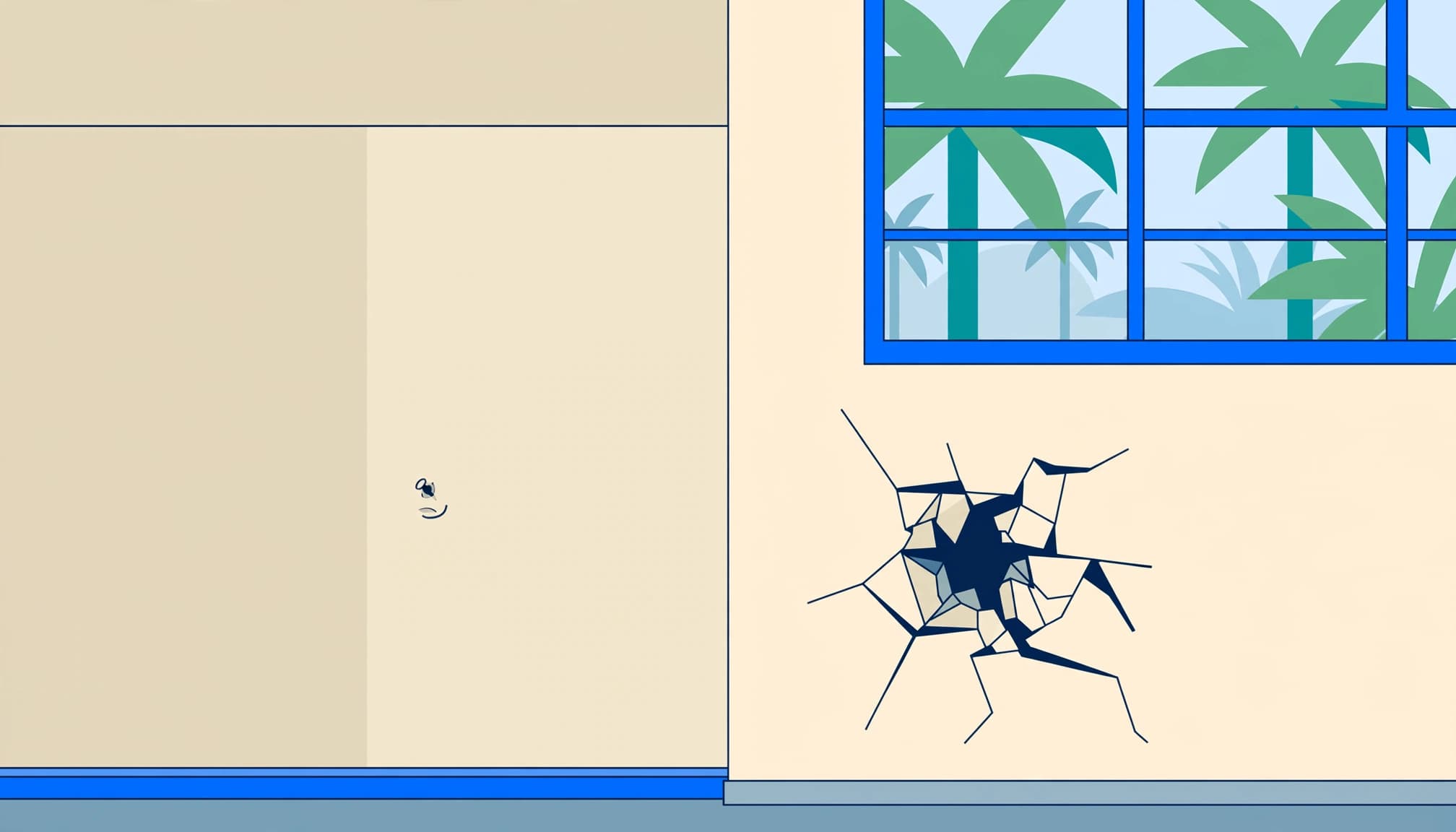
Faded paint, small nail holes, minor scuffs, and carpet worn in high-traffic hallways generally qualify as normal wear and tear. Their appearance alone doesn’t justify a security deposit deduction.
Routine repainting and carpet replacement are owner expenses when normal wear and tear or aging makes them necessary. An appliance reaching the end of its working life isn’t automatically a tenant expense.
We recommend evaluating the property’s starting condition and the length of occupancy before assigning responsibility.
Damage Goes Beyond Ordinary Use
Chargeable damage can include large drywall holes, broken windows or doors, countertop burns, and carpet stains caused by spills or pet accidents.
Pets can also cause damage through chewed baseboards or scratched doors. However, allowing pets doesn’t make every flooring or cleaning expense chargeable.
The landlord must connect the condition to the tenant, household members, or guests. Pre-existing damage, ordinary deterioration, and storm-related repairs shouldn’t automatically become tenant deductions.
Calculating a Fair Repair or Cleaning Charge
The lease agreement may describe repair responsibilities, but an invoice alone doesn’t establish liability, actual damage, or the amount the tenant legally owes.
Account for Age and Repair Scope
We recommend separating the tenant-caused loss from existing wear. If a localized repair restores damaged drywall, charging for an unnecessary whole-house repaint is harder to justify.
Likewise, a tenant who damages an older carpet shouldn’t automatically finance a premium replacement throughout the home. Consider the carpet’s prior condition, remaining useful life, and whether repair is practical. Florida law doesn’t provide one universal depreciation schedule for every rental item.
For appliances, distinguish mechanical failure from misuse. A worn-out refrigerator and a refrigerator with a tenant-broken shelf present different claims.
Separate Excessive Cleaning From Routine Turnover
Cleaning can support a charge when the tenant leaves excessive dirt beyond ordinary occupancy, such as substantial grease buildup or pet waste. Routine cleaning for the next resident generally remains an owner expense.
In the 2011 Broward County case Burley v. Mateo, deductions for carpet cleaning, general cleaning, and interior painting were treated as normal wear and tear under the circumstances. The discussion of the Burley decision illustrates why the actual condition matters more than an invoice’s label.
That fact-specific ruling doesn’t make every cleaning or painting charge invalid.
Building a Defensible Damage File
The strongest Florida tenant damage documentation compares the same areas at move-in and move-out. We recommend room-wide photographs plus close-ups, supported by dated condition reports.
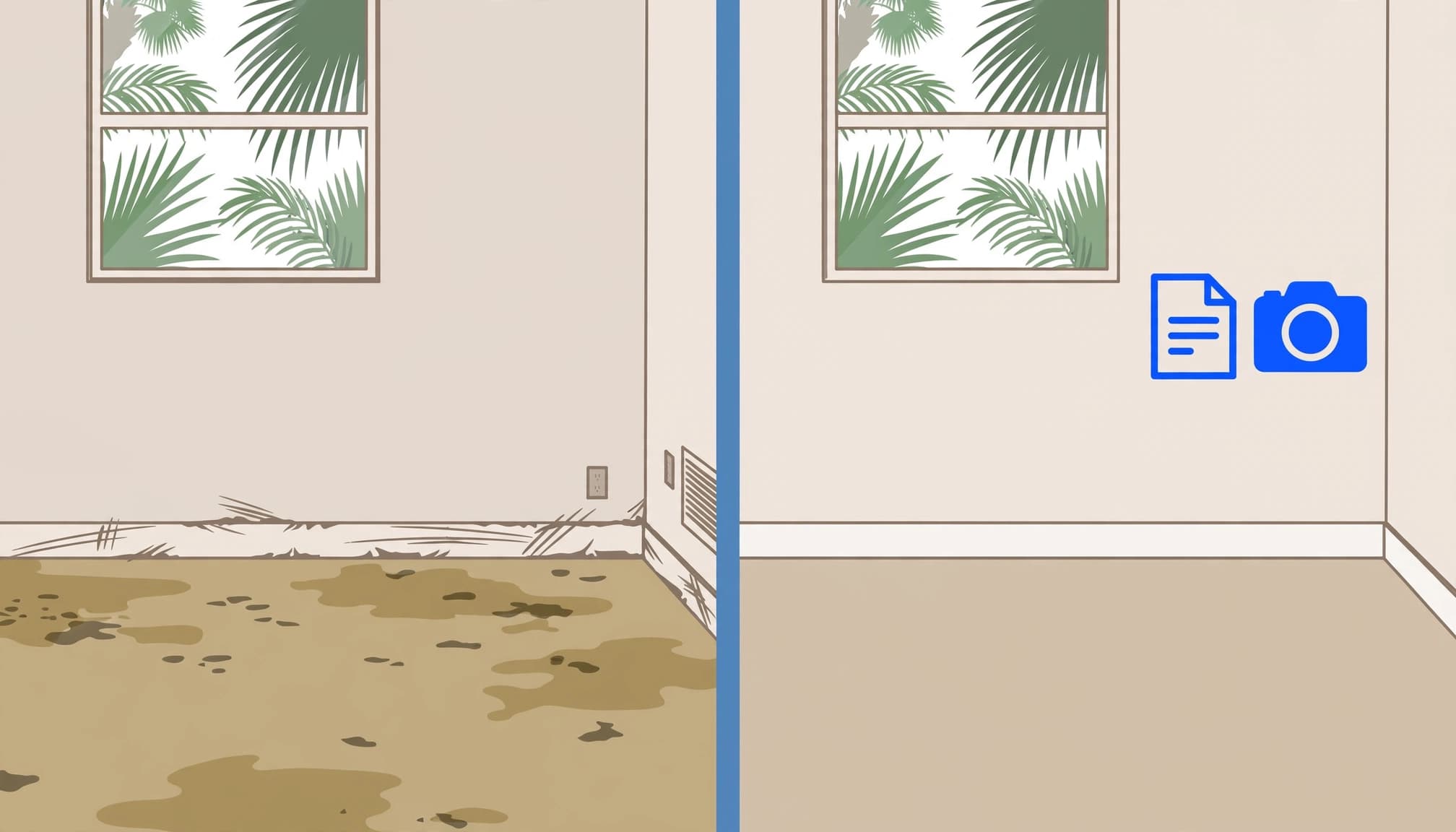
Keep the lease, maintenance requests, tenant communications, estimates, and invoices together as supporting documentation. For each deduction, identify the damaged item, its location, the work required, and the amount claimed.
A description such as “repair large drywall hole in bedroom wall” communicates more than “repairs.” Pair that description with photographs and the supporting estimate or invoice.
Also preserve evidence that supports the tenant’s position. Earlier maintenance reports may show that a cracked fixture or water stain existed before move-out.
Our team coordinates inspections and maintenance. You can discuss property management support if you need help organizing those responsibilities.
Following Florida’s Security Deposit Deadlines
Under Florida Statute 83.49, the deposit process generally begins when the tenancy terminates and the tenant vacates and delivers possession. Contractor delays don’t extend the statutory deadlines.
- Return the deposit within 15 days if there is no claim. Return the full deposit and any required interest. Damage deductions aren’t the only possible claims; unpaid rent or other legally recoverable charges may also matter.
- Send written notice of a claim within 30 days if making deductions. Use certified mail to the tenant’s last known mailing address, or qualifying email under Section 83.505 when the required consent exists. Include the statutory language, reasons, and an itemized amount for each deduction.
- Allow 15 days after receipt for a written objection. The tenant’s response period starts upon receiving the notice, not when the landlord mails it.
- Return the remaining balance on time. If no timely objection arrives, the landlord may deduct the stated claim and must send the balance within 30 days after the notice date.
An informal text message or invoice doesn’t replace the required notice. The Florida Bar’s claim-notice form provides the statutory format.
Missing the 30-day notice deadline generally forfeits the right to deduct from the deposit, even when the underlying damage is real.
The landlord generally must return the deposit before pursuing a separate damages lawsuit and cannot simply use it as a setoff.
Responding to Disputed or Excessive Deductions
Tenants should object in writing within 15 days after receiving the landlord’s “written notice.” Identify each disputed deduction and explain why, using move-in photos, maintenance records, or evidence of ordinary wear. Keep proof of delivery.
Landlords should compare the objection against the complete file. Correcting an unsupported charge early can prevent a larger dispute. A timely objection leaves the disputed claim contested, but it doesn’t establish that either party is right.
If negotiation fails, an appropriate money claim may proceed in small claims or another court with jurisdiction. Under Section 83.49(3)(c), the prevailing party in a security deposit action is entitled to court costs and reasonable attorney fees.
A missed notice deadline doesn’t automatically create statutory or punitive damages. Seek legal advice when liability, notice validity, or possession remains contested.
Separating Property Damage From Lease-Break Losses
Physical damage and rent owed after an early departure require separate calculations. Breaking a lease doesn’t automatically forfeit the entire security deposit.
Florida Statute 83.595 provides four remedies after a tenant breaches and possession returns through surrender, abandonment, or the court process.
The choices affect the landlord’s ability to collect future rent.
| Remedy | Main Effect |
|---|---|
| Retake possession for the landlord’s account | Ends the tenant’s liability for future rent. |
| Retake possession for the tenant’s account | Allows recovery of the rent shortfall if the landlord makes good faith efforts to relet. |
| Leave the agreement in place | Allows collection of rent as it becomes due. |
| Use agreed liquidated damages or an early termination fee | Limits the agreed charge to no more than two months’ rent. |
These are alternative remedies, not cumulative ways to collect the same loss.
Only Remedy 2 imposes a duty to mitigate under Section 83.595. The statute sets no fixed deadline to re-rent. Document advertising, showings, and market-supported pricing, using efforts comparable to the initial rental or similar units.
The fourth remedy requires separate tenant acceptance in an addendum when the agreement is made. It doesn’t authorize stacking the fee with future-rent recovery under another remedy.
When Property Damage Can Lead to Eviction
Proven intentional destruction can support a seven-day termination notice without an opportunity to cure under Florida’s lease-termination statute. However, the landlord must still follow the court process if the tenant doesn’t surrender possession.
A termination notice isn’t an eviction order. Accidental damage and ordinary wear don’t automatically justify treating a violation as incurable.
Florida prohibits self-help eviction, including changing locks, shutting off utilities, or forcibly removing residents outside the lawful process. Recovering repair costs and recovering possession are separate matters, each requiring appropriate evidence and procedure.
Frequently Asked Questions
Can a Landlord Charge for Repainting After Move-Out?
Yes, when documented tenant-caused damage requires painting beyond ordinary turnover. However, faded paint and routine refresh work generally remain owner expenses. We recommend limiting any claim to work reasonably connected to the damage, with consideration for the paint’s prior condition.
What if the Lease Makes Tenants Responsible for Normal Wear?
A lease clause doesn’t automatically turn ordinary aging into chargeable damage or override statutory protections. The provision’s enforceability depends on its wording and applicable law. We recommend legal review before relying on a blanket clause requiring tenants to pay every turnover expense.
Can Charges Exceed the Security Deposit?
Yes. A deposit doesn’t necessarily cap a tenant’s liability for proven damage. A landlord may pursue an additional supported claim through the appropriate legal process. However, the amount still requires evidence, and the deposit portion remains subject to Section 83.49’s notice requirements.
Protecting the Property With Fair, Supported Charges
Florida landlords can recover legitimate tenant-caused losses, but a defensible claim needs both evidence and proper procedure. Documented responsibility matters as much as the repair bill.
We recommend comparing move-in and move-out conditions before calculating deductions. Then send the required notice on time, so a justified claim doesn’t fail because of a preventable deadline error.