Florida CO alarm law requires alarms in qualifying buildings and additions constructed on or after July 1, 2008, when they contain a covered carbon monoxide source. It doesn’t create a blanket requirement for every existing rental home simply because a new tenant moves in.
For rental investors, the distinction matters, but working safety equipment deserves attention beyond the minimum installation trigger. A homeowner who rents out a qualifying property should separate construction requirements from landlord obligations and ongoing maintenance. Review each before handing over the keys.
Key Takeaways for Rental Owners
- Florida’s statutory triggers include qualifying construction with fuel-burning equipment, a fireplace, an attached garage, or another combustion-related CO source. In a covered sleeping area, required alarms generally belong within 10 feet of every sleeping room. “Sleeping area” is descriptive and doesn’t change this legal placement rule.
- The Florida Building Code may require alarms in another location.
- Smoke alarms have separate requirements, so a smoke-only device doesn’t satisfy a CO alarm requirement.
- We recommend documenting alarm locations, testing, replacement dates, and completed repairs throughout each tenancy.
Florida CO Alarm Law: Which Homes Are Covered?
The relevant Florida state statute is Florida Statutes Section 553.885, rather than a national summary of landlord responsibilities.
Qualifying Construction and Carbon Monoxide Sources
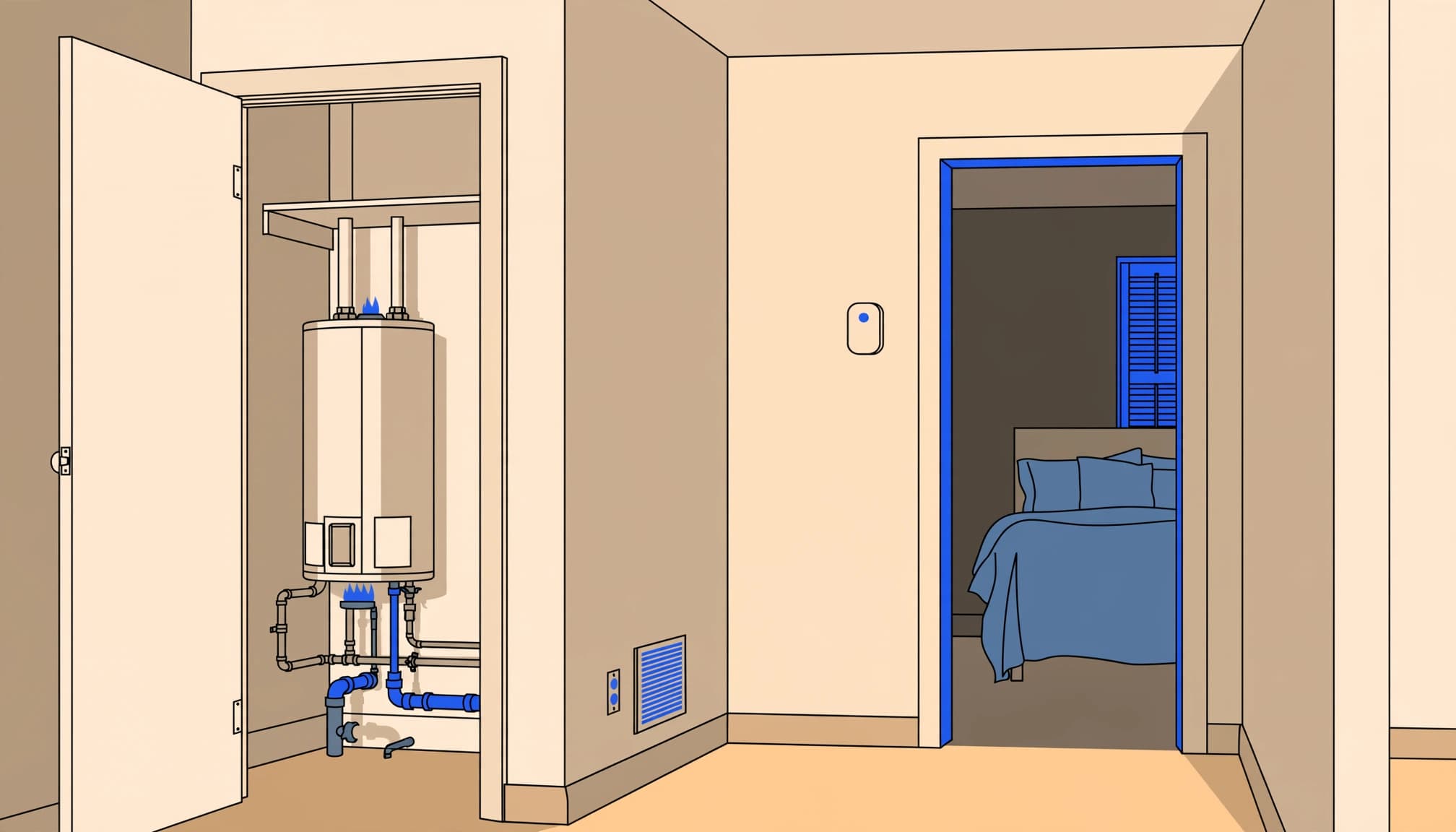
Section 553.885 covers qualifying separate buildings and additions constructed on or after July 1, 2008. Alarm installation is required for covered buildings with fossil-fuel-burning heaters or appliances, fireplaces, attached garages, or other features that produce CO through combustion.
An all-electric appliance package doesn’t settle the question. An attached garage can trigger the requirement even when the home has no gas furnace or water heater.
The statute recognizes approved hardwired or battery-powered alarms, including qualifying combination smoke/CO devices. Owners of multi-family buildings should assess each qualifying building and applicable code provisions rather than assume the same rules apply to every property type.
Existing Rentals and Changes in Tenancy
A lease renewal, ownership change, or new tenant doesn’t independently trigger installation under Section 553.885. Ordinary repairs also aren’t the same as an addition.
For this statute, an addition means an extension or increase in the building’s floor area, number of stories, or height. That distinction matters when an investor evaluates an older home with later improvements.
We recommend keeping construction dates and addition records with the property’s maintenance file. The home’s original age alone may not describe all the work that affects its alarm requirements.
Who Handles Installation and Maintenance?
We treat compliance with applicable safety requirements as a property-management responsibility for the property owner, with tasks assigned clearly rather than left to assumption.
Landlord Duties and Lease Responsibilities
Florida’s landlord maintenance statute requires compliance with applicable building, housing, and health codes. The requirements that apply to the property determine whether CO alarms are needed, not simply whether the lease mentions them.
Under landlord-tenant law, a written agreement can allocate routine testing, battery replacement, and reporting duties. It can’t waive applicable building-code requirements.
Before move-in, record each alarm’s location, power source, manufacturer date, test result, and visible condition. Give tenants a written disclosure of alarm locations and reporting steps, and keep a copy with the maintenance records. During the tenancy, provide a clear way to report chirping, missing, damaged, or malfunctioning devices. Keep reports and completed work together to show the problem and response.
Smoke Alarms Remain a Separate Requirement
Unless otherwise agreed in writing, Section 83.51 requires landlords to install working smoke-detection devices at the beginning of a single-family-home or duplex tenancy.
The Florida Residential Code addresses smoke alarms in R314 and CO alarms in R315. These sections cover different hazards, so meeting one requirement doesn’t automatically meet the other.
Listed combination smoke and CO alarms can meet both requirements when the device specifications and location satisfy the applicable rules for each hazard. A hallway combination alarm doesn’t replace separately required bedroom smoke alarms.
Covered HUD-assisted housing also has a separate hardwired-or-sealed-10-year-battery smoke-alarm requirement effective December 29, 2024. That federal requirement shouldn’t be confused with Florida’s CO installation trigger.
Where to Install and When to Replace Alarms
Correct alarm placement matters as much as having a device in the property. Florida’s legal distance requirement is separate from broader safety recommendations.
Placement Near Sleeping Rooms
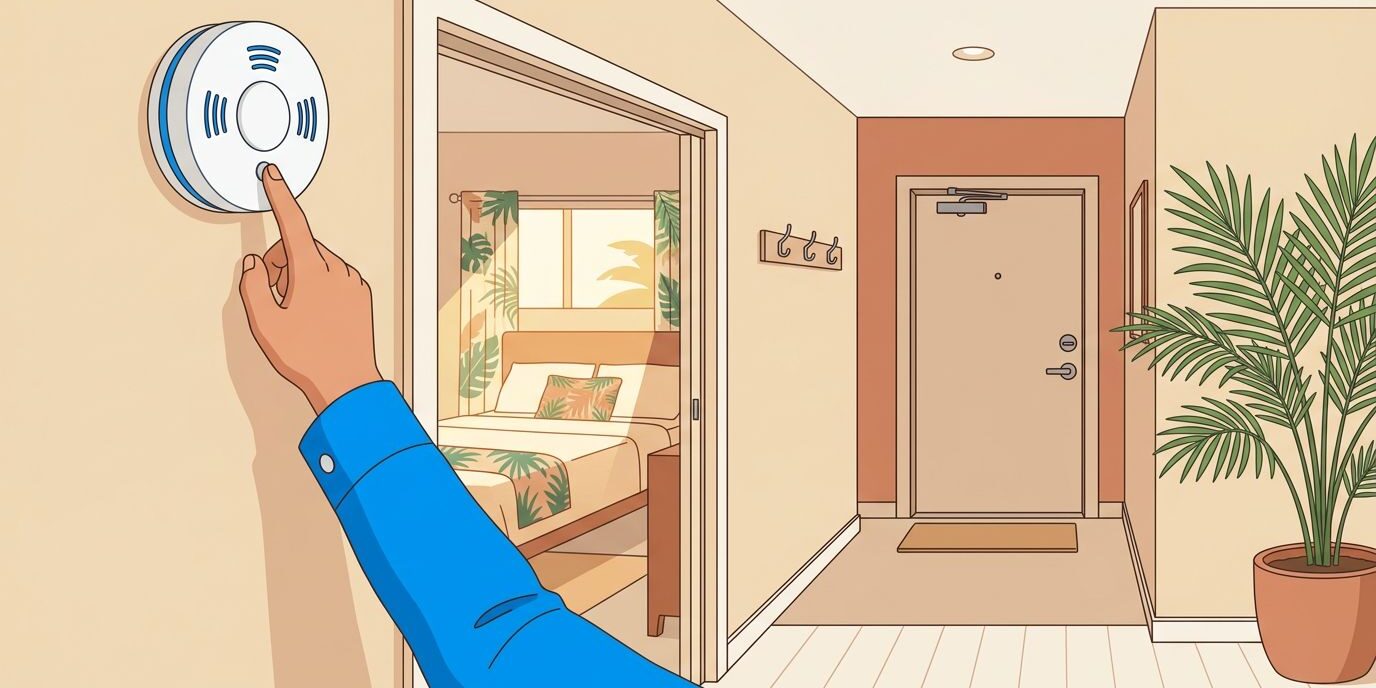
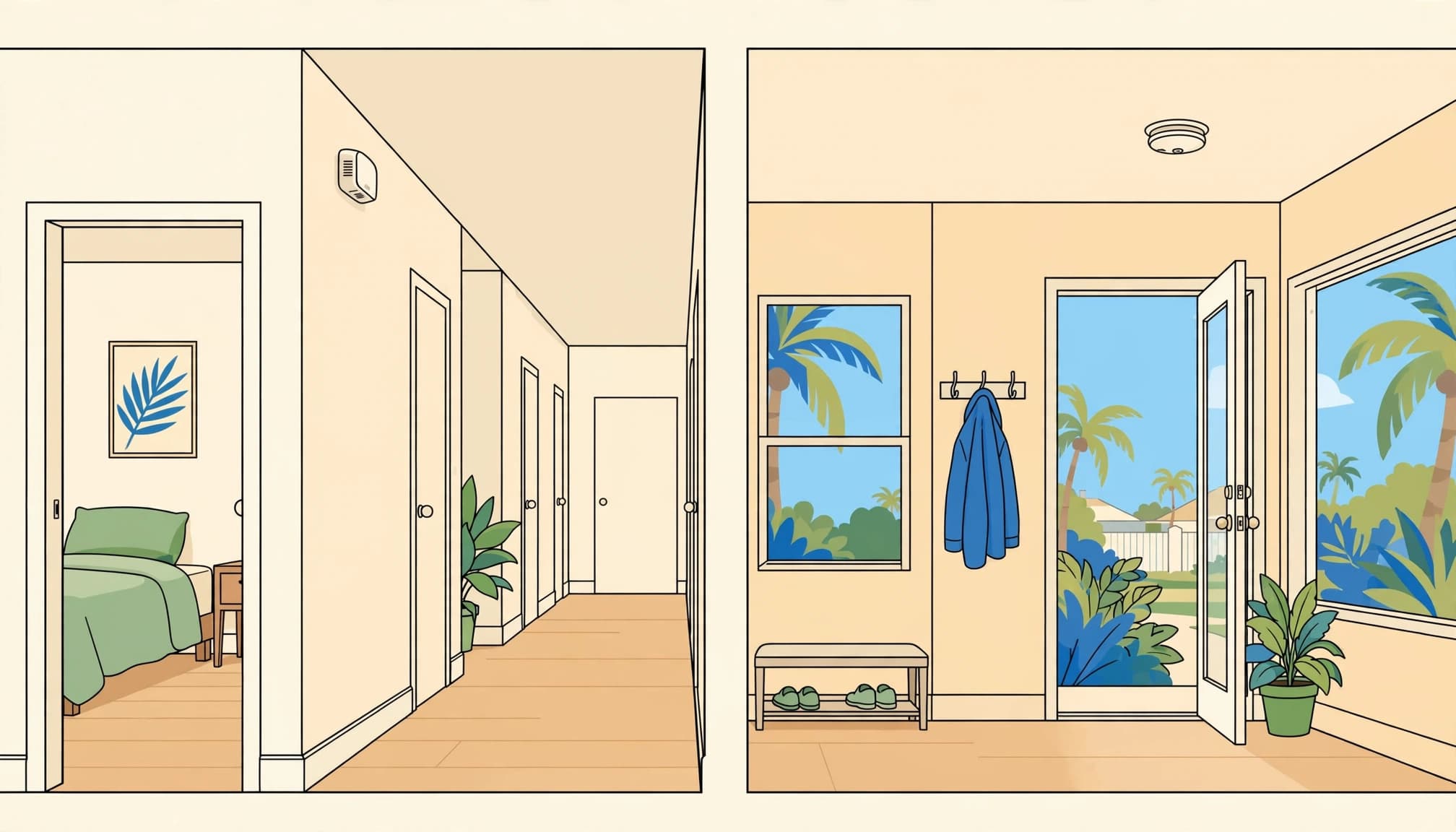
Florida’s statute specifies an operational CO alarm within 10 feet of each room used for sleeping, or another location required by the Florida Building Code. A general 15-foot allowance isn’t the Florida statutory rule.
We also recommend coverage outside each separate sleeping area and on every level, using devices suitable for those locations. Follow the manufacturer’s installation instructions for wall or ceiling mounting and separation from vents, windows, and appliances.
CO mixes with indoor air because its density is close to air’s density. Mounting decisions shouldn’t rely on the assumption that CO always sinks toward the floor.
Testing, Batteries, and End-of-Life Replacement
We recommend monthly testing unless the manufacturer’s instructions call for another routine. Tenants should report failed tests and end-of-life signals promptly, without removing or disabling the alarm.
Some CO alarms have a five-to-seven-year service life, while other models last longer. The device’s marked replacement date and instructions control the maintenance schedule.
A fresh battery doesn’t extend an expired sensor’s service life. Record the installation date and replace-by date to plan the replacement schedule and budget the expense. Also distinguish a low-battery chirp from an emergency alarm pattern using the manufacturer’s instructions.
How Florida Compares With Other States
National rules provide context, but they shouldn’t determine a Florida property’s obligations. Cannon Law’s state-by-state CO alarm guide outlines carbon monoxide detector requirements by state.
| Approach | States Listed by the Guide |
|---|---|
| Standalone CO alarm statutes | California, New York, Illinois, Colorado, Oregon, Washington, and more than 20 others |
| Requirements through International Residential Code adoption, mainly affecting new construction | Alabama, Georgia, Idaho, Kentucky, Louisiana, New Mexico, North Dakota, Ohio, Oklahoma, South Carolina, Virginia, and Wyoming |
| No statewide mandate identified, although local ordinances may apply | Hawaii, Kansas, Indiana, and Missouri |
A state statute can set a different installation trigger, so category labels alone don’t determine a property’s obligations.
The guide describes Colorado Revised Statutes Section 38-45-104 as covering rentals with fuel-fired appliances or attached garages when tenant occupancy changes on or after July 1, 2009. Qualifying permitted interior alterations, repairs, appliance replacements, or additions can also trigger the requirement. Verify the current Colorado Revised Statutes before applying its tenant-change trigger; it isn’t a Florida rule.
The Oregon summary identifies a habitability concern. It treats a rental without a required functioning alarm as uninhabitable and prohibits renting a dwelling with a CO source without one. Meanwhile, the guide says North Carolina landlords have 15 days after written tenant notice to repair or replace a detector.
The guide also identifies functioning-alarm requirements before residential property transfers in Colorado, Nebraska, and Washington. It describes requirements for common areas and mechanical rooms in New Jersey, Vermont, and Wisconsin.
Those summaries show why investors with properties in multiple states need separate compliance procedures. Colorado’s tenant-change trigger and North Carolina’s repair deadline aren’t Florida rules.
Missing Alarms, Written Notices, and Liability
A missing required alarm can create code-compliance problems. If someone suffers CO poisoning, potential negligence liability depends on the owner’s duty, a breach, causation, and resulting harm. An absent device doesn’t automatically establish every element.
We recommend prompt safety repairs rather than waiting for formal legal notice. For qualifying material noncompliance under Section 83.51(1), Section 83.56(1) permits termination after a proper written notice and an uncured seven-day period. The notice must identify the problem and state the tenant’s intention to terminate.
That remedy doesn’t automatically apply to every alarm complaint. A Florida attorney should address disputed termination questions, while a carbon monoxide poisoning lawyer can assess injury claims.
Recognizing a Possible CO Emergency
The CDC’s carbon monoxide poisoning guidance lists headache, dizziness, weakness, upset stomach, vomiting, chest pain, and confusion. Symptoms can resemble flu, which can make the danger harder to recognize.
If a CO alarm sounds or poisoning is suspected, occupants should leave immediately and call 911 from outside.
Responding After the Immediate Danger
Don’t treat silencing the alarm as completing the repair. Emergency responders and qualified technicians should address the source before occupants return.
For Southwest Florida rentals, hurricane instructions should also prohibit operating portable generators indoors or inside garages. Keep generators outdoors, at least 20 feet from doors, windows, and vents. An open garage door doesn’t make indoor generator operation safe.
Frequently Asked Questions
Does an All-Electric Rental Need a CO Alarm?
It can. An attached garage is a covered source under Florida’s statute, even without gas appliances. The construction or addition trigger still matters. We wouldn’t classify a home as exempt solely because its kitchen and water heater use electricity.
Must an Alarm Be Installed Before Every New Tenant Moves In?
Section 553.885 doesn’t make a tenant change an independent installation trigger. However, any alarm already required for the property must be operational. We recommend testing and documenting required devices before every handover, rather than treating turnover as a reason to postpone maintenance.
Can Tenants Remove a Chirping CO Alarm?
Tenants shouldn’t disable safety equipment. They should report the signal and follow the manufacturer’s instructions for routine battery care. Oregon expressly prohibits tenant removal or tampering. For Florida rentals, clear lease instructions should distinguish routine upkeep from repairs the owner must arrange.
Should a Buyer Treat a Passed Home Inspection as Proof of Compliance?
A home inspection provides useful condition information, but it doesn’t replace the property’s construction records or applicable legal requirements. We recommend including alarm locations, device age, garage connections, and fuel-burning equipment in rental acquisition due diligence. Keep the resulting records available for future maintenance and leasing.
A Dependable Safety Plan for Rental Owners
Florida’s requirements depend on the property’s construction history, covered CO sources, and applicable codes. Clear responsibilities and reliable records help owners turn those requirements into dependable rental operations.
We recommend documenting working alarms before occupancy, tracking replacement dates, and responding promptly when residents report problems. These steps support tenant safety and protect the investment without confusing another state’s rules with Florida law.
For help with inspections and maintenance coordination in Southwest Florida, contact Best Investing Realty.