Florida smoke alarm requirements depend on the home’s construction, renovation history, and rental program, but owners need working, correctly placed alarms. New homes generally require hardwired, interconnected units with battery backup; qualifying repairs and Level 1 alterations allow sealed 10-year battery alarms.
For rental investors, clear responsibilities and dependable maintenance records make compliance easier to manage. Separate landlord duties, building-code placement rules, and HUD requirements before choosing a smoke detector. Local fire or building requirements may also apply, so check with the relevant local authority.
Key Takeaways
- New construction generally requires hardwired, interconnected smoke alarms with battery backup. Qualifying one-family homes, duplexes, and townhomes may use a 10-year sealed battery alarm during certain repairs or Level 1 alterations.
- Required locations include every bedroom, outside each separate sleeping area, and every additional story, including basements and habitable attics.
- Covered HUD-assisted rentals have a separate hardwired-or-sealed-battery requirement that took effect December 29, 2024.
- Monthly testing, manufacture-date records, and prompt replacement help keep alarms dependable throughout the tenancy.
Landlord and Tenant Smoke Alarm Responsibilities
Working Alarms at Move-In
Under Florida Statute 83.51, unless otherwise agreed in writing, landlords must install working smoke-detection devices when a single-family home or duplex tenancy begins. The statute recognizes electrical or battery-operated devices listed by a nationally recognized testing laboratory.
A written lease can assign testing, battery replacement, and reporting duties to the tenant. However, it doesn’t cancel applicable building-code requirements. The statute’s written-agreement language also isn’t limited solely to ongoing maintenance.
We recommend that the landlord document alarm locations, power sources, test results, and existing defects before handing over the keys.
Reports, Repairs, and Written Notices
Give each tenant a clear way to report chirping, damaged, missing, or malfunctioning alarms. Keep the report, access arrangements, replacement invoice, and completion date together in the property file.
Section 83.56(1) permits termination if a material failure under section 83.51(1) or a material lease provision remains uncured seven days after written notice is delivered. The notice must identify the problem and state the tenant’s intention to terminate.
That remedy isn’t automatic for every alarm complaint. The specific duty and facts matter, and legal disputes deserve review by a Florida attorney. Safety repairs should receive prompt attention rather than wait for formal notice.
Florida Smoke Alarm Requirements by Property Type
Existing Homes and Qualifying Repairs
Florida Statute 553.883 applies to one-family and two-family dwellings and townhomes undergoing repair or a Level 1 alteration. It allows alarms with a 10-year sealed battery instead of requiring a retrofit to the home’s electrical system.
Alarms newly installed or replaced because of a qualifying Level 1 alteration must have a nonremovable, nonreplaceable battery rated for at least 10 years. A standard replaceable 9-volt battery doesn’t meet this requirement.
The statute exempts certain centrally monitored or supervised systems, low-power radio-frequency wireless devices, and nationally listed multisensor devices, including smoke/CO combinations, from its battery requirements.
New Construction and Major Renovations
New construction requires hardwired alarms with battery backup that are interconnected, so activation of one alarm sounds the others. A renovation may require comparable upgrades based on its work classification and applicable code exceptions.
Use smoke alarms listed to UL 217. A repair exception doesn’t allow an existing hardwired system to be removed and replaced with unrelated battery units.
These distinctions help identify the starting point:
| Property or Work | Alarm Power Requirement |
|---|---|
| New construction | Hardwired, interconnected, with battery backup |
| Qualifying repair or Level 1 alteration | Sealed 10-year battery alternative allowed |
| Covered HUD-assisted rental | Hardwired or sealed 10-year battery |
| Existing ordinary rental without qualifying work | Applicable code and existing installation requirements govern |
Ownership alone doesn’t determine the device. An owner-occupied house and a rental house can share building-code requirements, while rental duties add another layer.
A Room-by-Room Smoke Alarm Placement Checklist
The Florida Residential Code’s R314 requirements set placement rules for properties covered by those provisions. Local enforcement requirements may also apply. Count sleeping rooms and separate sleeping areas rather than relying on the home’s advertised bedroom count alone.
Use this walkthrough to check placement requirements that apply to the property:
- Install an alarm inside every sleeping room required by the applicable code, including any room actually used as a bedroom.
- Place an alarm outside each separate sleeping area, in the immediate vicinity of the bedrooms. Separate bedroom wings can require separate hallway alarms.
- Cover every additional story required by the applicable code, including a basement or habitable attic. Crawl spaces and uninhabitable attics are excluded.
- Account for split levels. An upper-level alarm can serve an adjacent lower level without an intervening door when the lower level is less than one full story below.
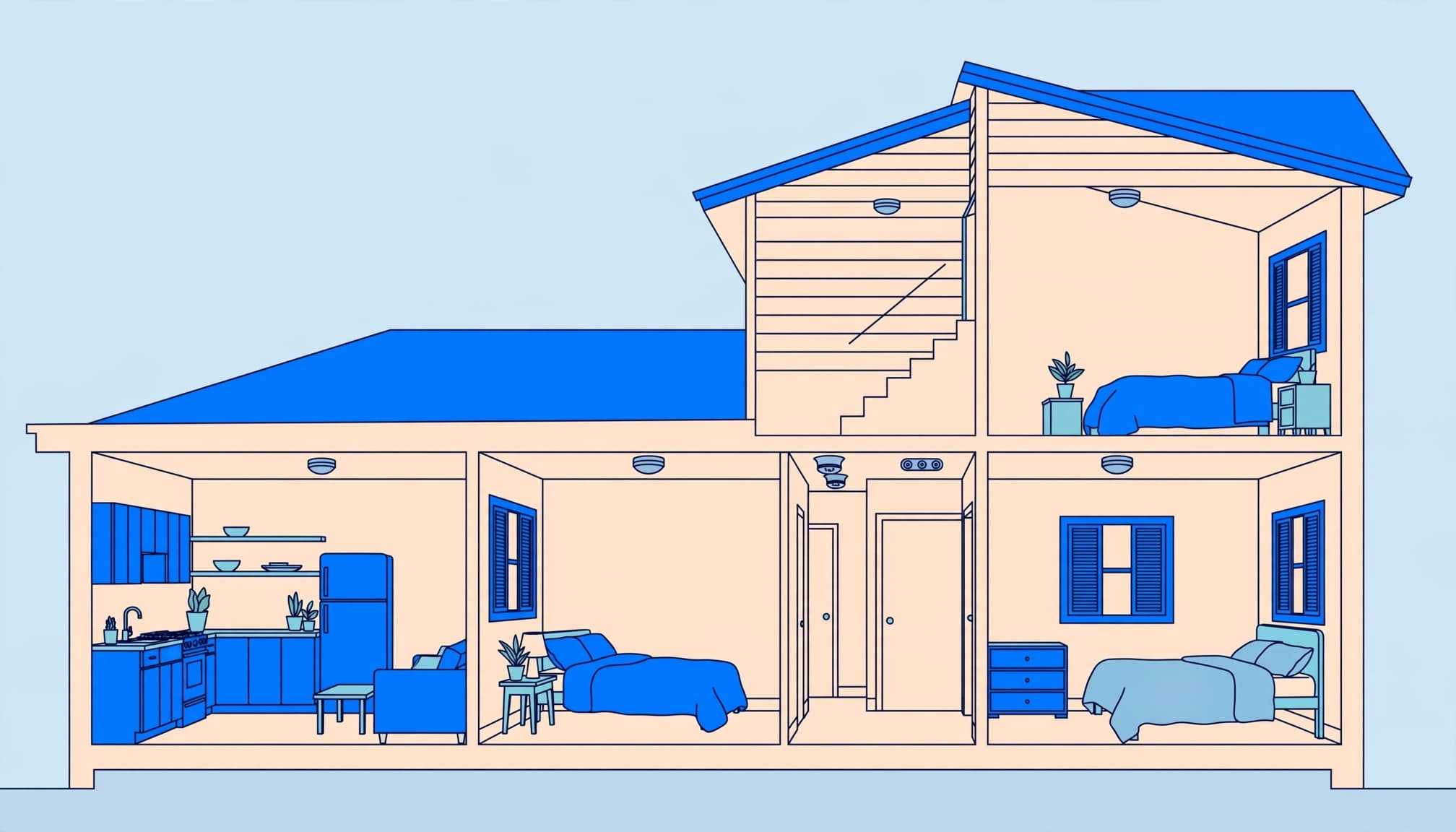
A hallway alarm doesn’t replace bedroom alarms where R314 applies. Adding a bedroom or converting an attic can also change the required coverage.
For buyers evaluating a rental investment, alarm placement belongs in the property-condition review alongside electrical, roof, and plumbing concerns.
Cooking, Bathroom, and Mounting Clearances
Cooking Appliance Setbacks
A blanket “10 feet from the kitchen” rule misses important distinctions. Florida’s residential code measures horizontal distance from a permanently installed cooking appliance and sets different clearances by alarm type.
Ionization alarms require 20 feet of separation. Ionization alarms with a silencing switch require 10 feet. Photoelectric alarms require 6 feet, as do alarms listed and marked to help reduce cooking nuisance alarms.
The code allows an exception when these distances would prevent placement of an otherwise required alarm. A listed photoelectric device can help reduce nuisance alerts while keeping sleeping areas protected.
Removing a battery because cooking repeatedly activates an alarm leaves the home without dependable protection.
Bathrooms, Ceilings, and Walls
Install alarms at least 3 feet horizontally from the door or opening of a bathroom with a bathtub or shower, unless that distance would prevent required placement.
Mounting instructions also matter. Older guidance commonly specifies ceiling mounting at least 4 inches from a wall, or wall mounting between 4 and 12 inches below the ceiling. Those measurements aren’t universal requirements for every current alarm.
Follow the device’s listed installation instructions and applicable NFPA 72 provisions. Sloped ceilings, airflow, obstructions, and alarm design can affect suitable mounting locations. Painting over an alarm or placing furniture in front of it can interfere with operation.
Battery Rules and Replacement Timing
Monthly Testing and Battery Care
The U.S. Fire Administration’s smoke alarm guidance recommends testing alarms monthly with the test button. For conventional replaceable-battery alarms, replace batteries at least annually and sooner when a low-battery warning occurs.
Sealed 10-year units don’t receive replacement batteries. When the battery fails or the unit reaches its end-of-life warning, replace the entire alarm.
A chirp can indicate low power, end of life, or a fault. Follow the device’s signal instructions rather than disconnecting it. Hardwired alarms still need testing and appropriate backup-battery maintenance.
Finding the Manufacture Date
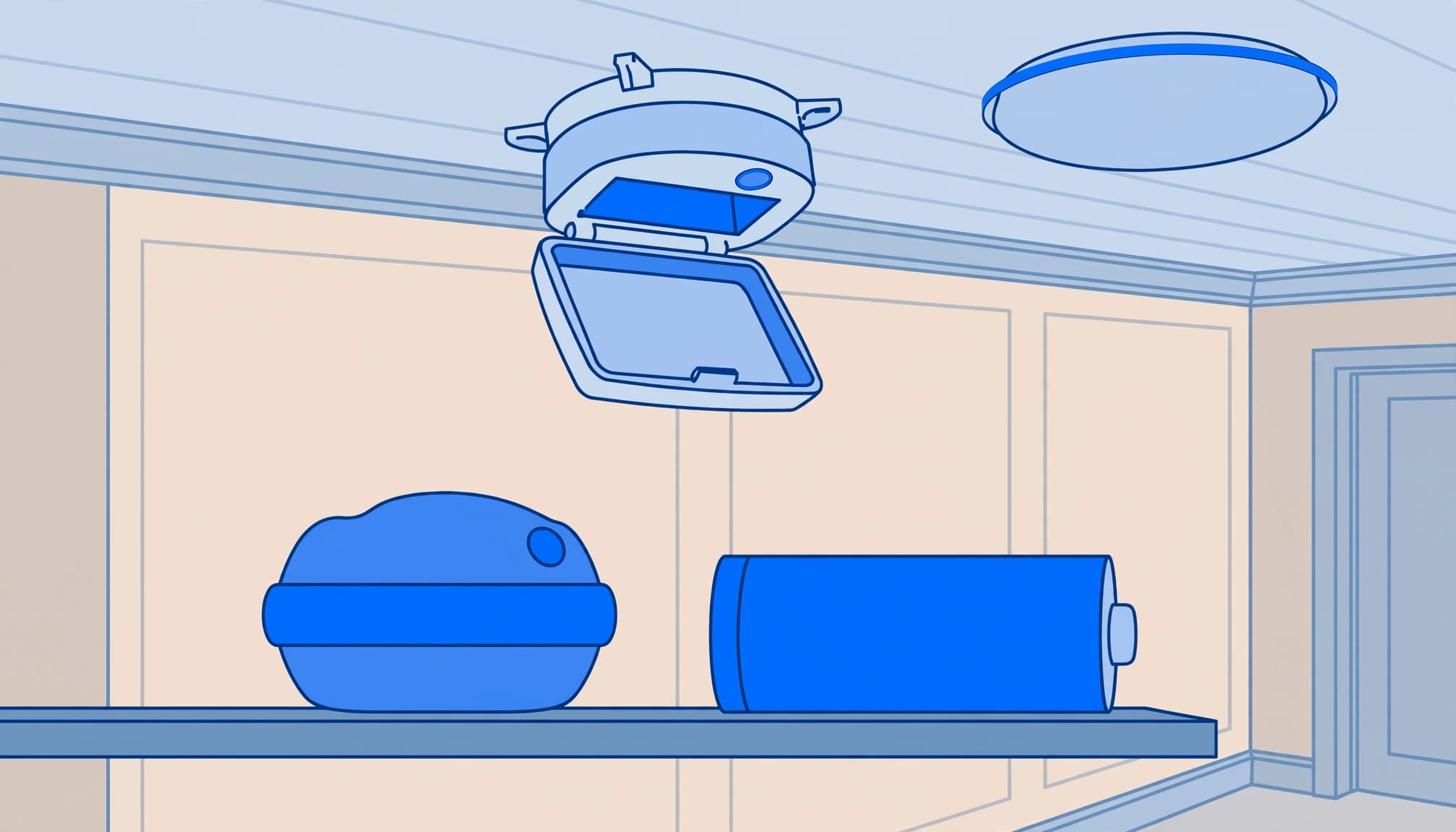
Replace standard smoke alarms every 10 years, or sooner if the manufacturer requires it or the device fails. A sealed battery rated for up to 10 years doesn’t guarantee trouble-free operation for that entire period.
Find the manufacture date on the label on the back of the alarm. Safely release the unit from its mounting bracket according to its instructions, then record the date and replacement deadline.
We recommend keeping dated photographs with the maintenance file. A recent purchase receipt doesn’t establish the alarm’s manufacture date.
Carbon Monoxide Alarms Have Separate Rules
A carbon monoxide alarm detects a different hazard from a smoke alarm. A home may need both, even when its smoke alarms are properly installed.
Florida Statute 553.885 applies to qualifying buildings or additions constructed on or after July 1, 2008, with features such as a fossil-fuel-burning appliance, fireplace, or attached garage. It requires an approved, operational CO alarm within 10 feet of each sleeping room, or in another location required by the Florida Building Code.
The statutory distance is 10 feet, not a general 15-foot allowance. A listed combination smoke/CO alarm can meet both requirements if its placement and specifications comply with each. It doesn’t replace any separately required bedroom smoke alarms.
HUD and Voucher Rentals Add Federal Requirements
Covered HUD-assisted housing must have hardwired smoke alarms or sealed 10-year battery devices. The federal requirement took effect on December 29, 2024, separate from Florida’s repair-based sealed-battery provision.
Some housing authorities began NSPIRE inspections on June 1, 2025, but there wasn’t one statewide start date. HUD later extended certain voucher-program inspection provisions to February 1, 2027.
HUD’s current voucher inspection notice clarifies that delayed NSPIRE implementation doesn’t postpone the smoke-alarm mandate. Authorities that still use older Housing Quality Standards inspections must apply the applicable smoke and CO requirements.
For investors, a device allowed under a limited Florida exception may still fail the federal power-source standard. Keep the property’s assistance-program status, inspection findings, and completed corrections in its records.
Ordinary private rentals don’t become HUD-regulated simply because they’re leased. Properties in federal assistance programs must meet applicable state and federal requirements.
Dependable Protection Starts With Clear Records
Correct placement, suitable power sources, and timely replacement make smoke alarm compliance easier to maintain. A clear lease helps organize responsibilities, but working devices and documented follow-through provide the protection.
At Best Investing Realty, we help owners coordinate inspections and maintenance as part of dependable rental management. You can discuss rental property management with our team to support a consistent plan for your investment.
Frequently Asked Questions
How Many Alarms Does a Three-Bedroom House Need?
A one-story, three-bedroom home with one shared sleeping area generally needs at least four alarms: one in each bedroom and one outside the bedrooms. Separate bedroom wings, additional stories, or a habitable attic can increase that number.
Are Standard 9-Volt Battery Alarms Illegal Throughout Florida?
Florida Statute 553.883 doesn’t ban every existing 9-volt alarm. However, a standard replaceable-battery unit doesn’t meet the sealed-battery requirement for covered Level 1 installations or replacements, or HUD’s covered battery-only installations.
Does Florida Require Annual Rental Smoke Alarm Inspections?
Florida doesn’t set a single statewide annual smoke alarm inspection schedule for ordinary rental homes. Monthly test-button checks are recommended, while local codes and housing programs may set separate inspection schedules. Include alarm checks at move-in, turnover, and routine property inspections, with proper notice and lawful access.