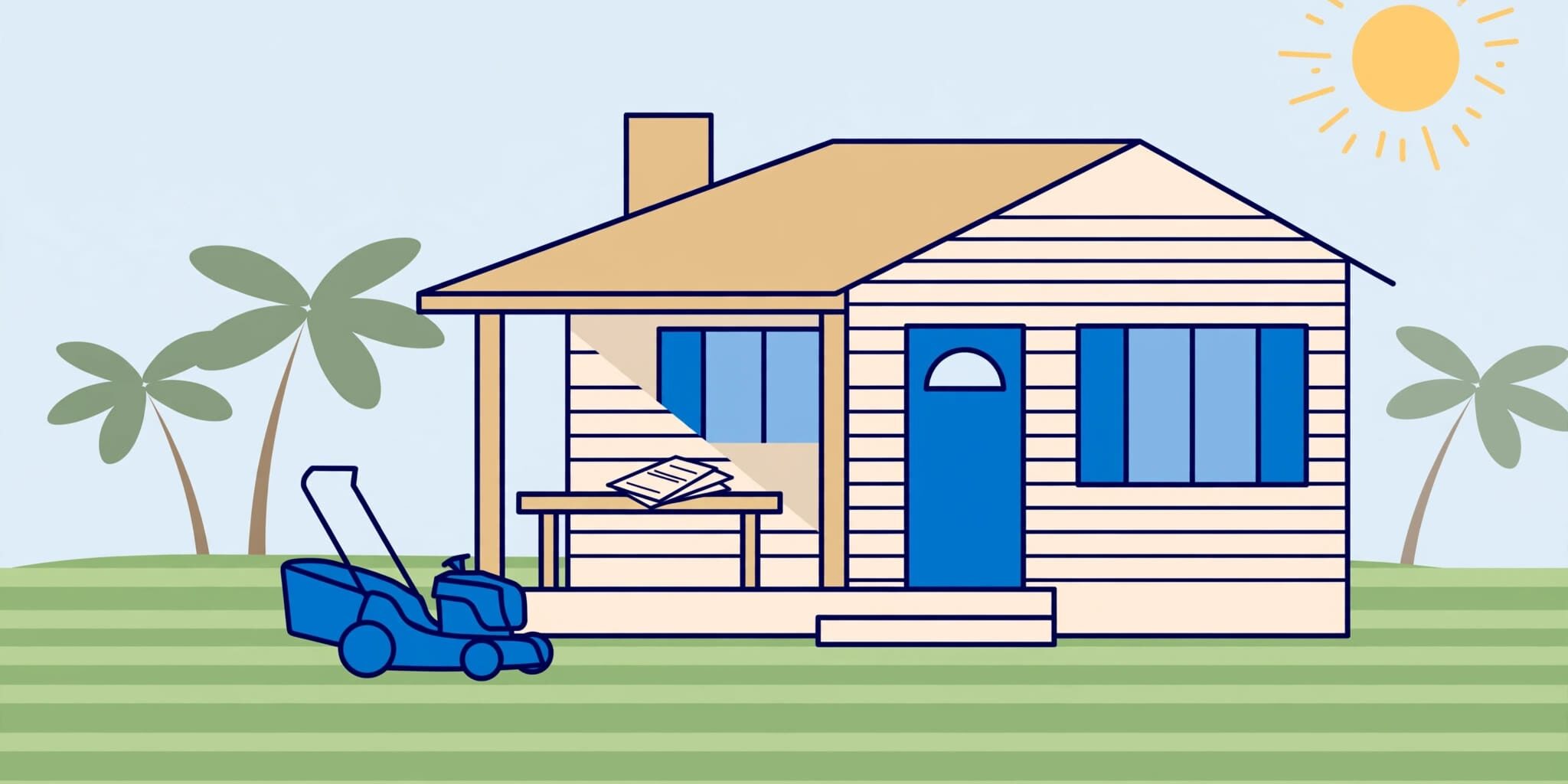
For a Florida rental home, the lease usually determines who pays for routine lawn care, subject to applicable law and local rules. Florida law doesn’t automatically assign every tenant the mowing bill.
We recommend treating Florida rental lawn care as a written operating responsibility, with separate terms for routine upkeep and repairs. A clear agreement helps you budget accurately and resolve problems without turning a missed mowing into a larger dispute.
Key Takeaways
- The lease should identify who arranges lawn service and who pays for it.
- Routine mowing doesn’t automatically include irrigation repairs, tree work, pest treatment, or replacement sod.
- Owners should budget for seasonal growth, vacancy-period service, and maintenance outside the tenant’s assigned duties.
Who Is Responsible for Florida Rental Lawn Care?
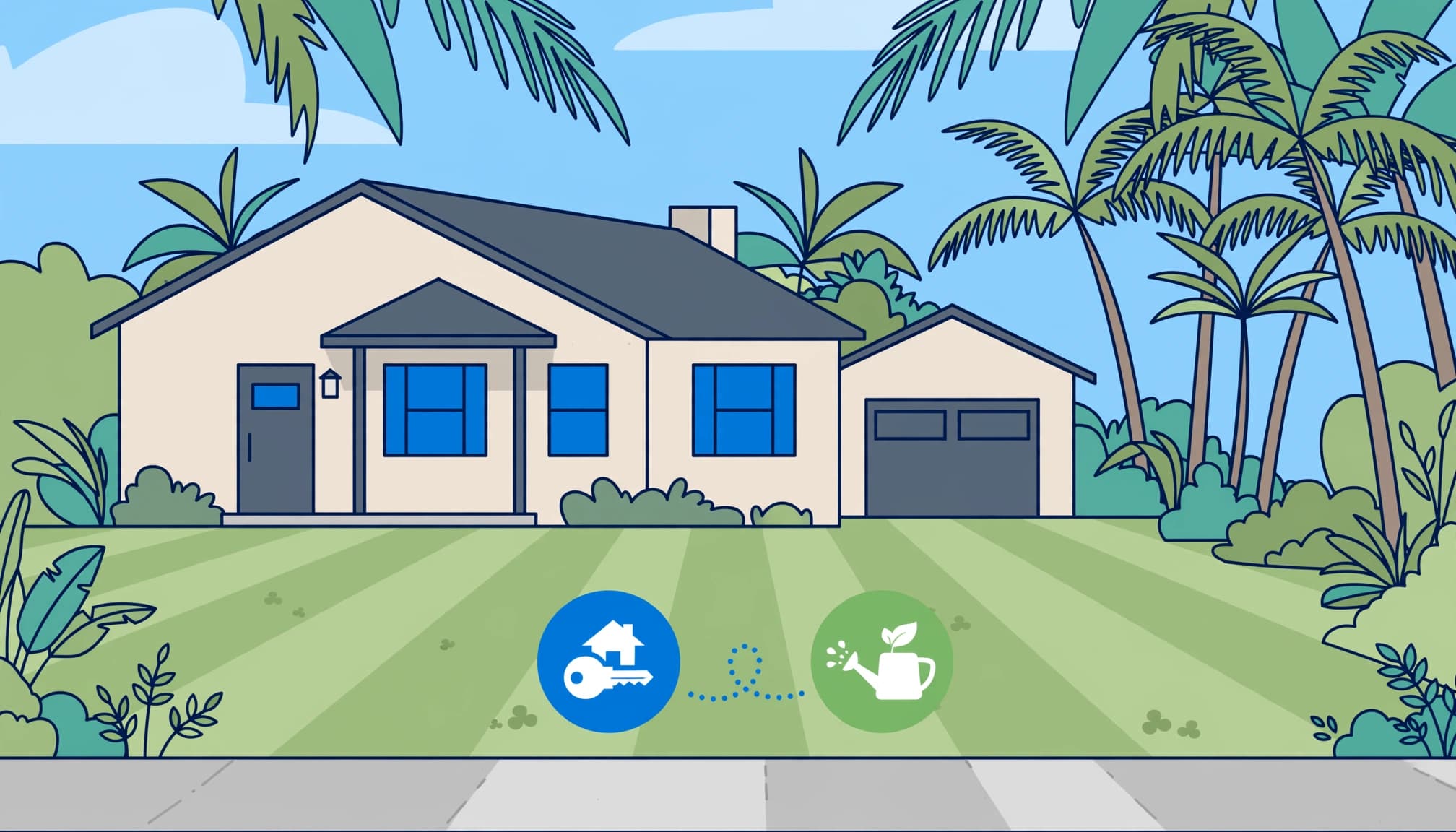
Responsibility for routine lawn care starts with the signed lease, but applicable Florida maintenance and safety requirements also matter.
What Florida Law Requires
Florida Statutes section 83.51 requires landlords to meet applicable building, housing, and health codes. Where those codes don’t apply, the statute identifies structural and plumbing maintenance duties.
It doesn’t expressly assign routine lawn mowing to either party. Neither “tenants always mow” nor “landlords always pay” is a dependable statewide rule.
For single-family homes and duplexes, certain statutory obligations can be modified through a written agreement. However, we wouldn’t rely on a blanket clause that makes tenants responsible for every exterior problem.
Routine Upkeep and Repairs Are Different
A lease can assign routine lawn mowing and edging to the tenant while leaving irrigation repairs and major tree work with the owner. It can also provide owner-paid lawn service, with that expense included in rental pricing.
The duty to arrange work and the obligation to reimburse its cost can differ. For example, a landlord may need to address a failed irrigation system promptly while separately evaluating documented tenant-caused damage.
A tenant’s mowing obligation doesn’t, by itself, make the tenant responsible for irrigation-system failures, major tree work, storm damage, or unsafe conditions.
What the Lease Should Say About Yard Work
We recommend a property-specific lawn-care addendum rather than a general promise to “maintain the yard.”
Define the Service and Payment Arrangement
State whether the owner, tenant, or association hires the provider. Then explain whether service is included in rent, paid directly by the tenant, or handled through another agreed arrangement.
Define mowing, string trimming, edging, and blowing separately from shrub trimming, weed treatment, and tree maintenance. Also identify who supplies equipment and handles fuel, storage, and routine servicing.
For contractor visits, address gates, pets, scheduling, and access. Any entry into the dwelling must follow applicable access requirements, not simply the vendor’s preferred schedule.
Allocate Watering, Repairs, and Association Duties
The agreement should identify who operates irrigation and pays the water bill. It should also establish a reporting process for leaks, broken sprinkler heads, drainage problems, and pest activity.
For HOA properties, check the association’s landscaping standards and any vendor, access, or scheduling requirements. These rules don’t replace the lease or determine landlord and tenant duties under Florida law.
Florida’s landlord-tenant law summary explains those separate obligations. Set spending authority so a routine service request doesn’t become an unauthorized repair bill.
What Professional Lawn Care Costs
Published service prices are a planning reference, not statewide quotes. Compare a provider’s instant pricing, when available, with estimates from local landscapers for the same lawn size and service frequency.
Routine Mowing Prices
LawnGuru advertises Florida City lawn mowing service starting at $38 per cut. Prices reach about $46, depending on lawn size and frequency. Its reported average price is $42.19, with a typical 2026 range of $38.18 to $46.20.
Typical service includes mowing, trimming, edging, and blowing clippings off hard surfaces. Fertilizer, irrigation repair, tree work, and major cleanup are separate unless the service agreement includes them.
Using $42.19 per visit, these monthly examples show how frequency affects your budget.
| Visits in a Month | Mowing Cost |
|---|---|
| Two | $84.38 |
| Four | $168.76 |
| Five | $210.95 |
A weekly schedule can produce five visits in some months, so we wouldn’t budget every month as exactly four cuts.
Larger Jobs Need Separate Budgets
Airtasker’s Florida listings span $20 for a simple mow to $3,000 for a turf installation. Those are different jobs, not the low and high ends of comparable mowing service.
For rental underwriting, separate recurring mowing from overgrowth removal, turf replacement, and storm cleanup. Also include service during vacancies, even when the lease assigns occupied-period lawn care to tenants.
How Often to Mow and Fertilize
A fixed monthly schedule can fall behind during Florida’s growing season. We recommend matching service to grass growth rather than choosing the cheapest interval.
Let Growth Determine Mowing Frequency
LawnGuru reports that 16% of customers choose weekly mowing, 50% choose bi-weekly mowing, and 33% choose monthly mowing. Those rounded booking figures describe customer choices, not what every lawn needs.
UF/IFAS recommends the one-third rule: remove no more than one-third of the grass blade in one mowing. St. Augustinegrass often needs weekly cuts during active growth, particularly in warm, rainy weather. Standard cultivars such as Floratam generally need a blade height of 3.5 to 4 inches.
Leave evenly distributed grass clippings because they return nitrogen, phosphorus, and potassium to the soil. However, break up large clumps because they can smother the grass.
Use Seasonal Advice With Local Limits
LawnGuru’s seasonal guidance pairs spring soil temperatures above 65°F with pre-emergent herbicide and a 3-1-2 nitrogen-phosphorus-potassium ratio. Its fall guidance favors potassium, such as 5-0-15, with reduced nitrogen to limit disease risk.
Those are commercial recommendations, not universal Florida prescriptions. Pre-emergent timing depends on the target weed and product label. Fertilization also depends on grass type, soil needs, active growth, and local ordinances.
UF/IFAS advises against fertilizing dormant turf. South Florida lawns may continue growing when lawns farther north slow down, so a statewide winter schedule doesn’t fit every property.
Hire a Lawn Service or Rent Equipment?
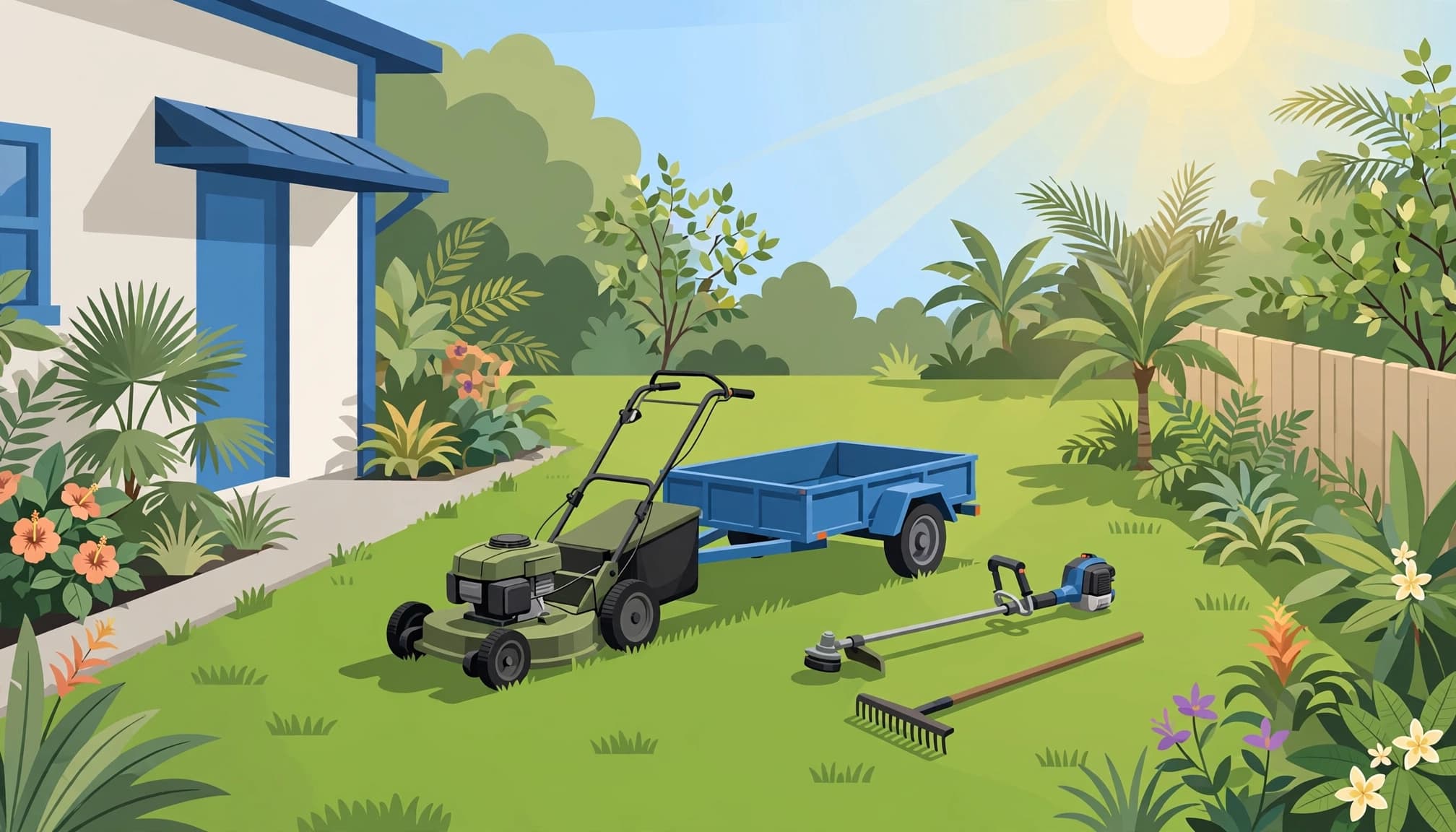
We generally favor professional service when an owner needs reliable scheduling without storing or transporting equipment.
When Professional Service Fits
Hiring a provider works well for remote owners, owners of multiple rental properties, and homes with strict appearance requirements. Written service specifications make it easier to distinguish a missed visit from work outside the contract.
For multiple rentals, request property-specific invoices and service records. That keeps each home’s operating expenses separate.
DIY mowing can suit an accessible property when the responsible person has suitable equipment and time. However, equipment rental for every routine cut adds transport and handling to a straightforward task.
When Equipment Rental Makes Sense
Equipment rental is usually better suited to an occasional landscaping project than recurring mowing. A string trimmer handles edges and obstacles; a sod cutter supports turf removal. Sod can also be used for turf installation. Excavation equipment and aerial lifts aren’t substitutes for a mower.
For Central Florida equipment, Rental Depot lists a Kissimmee location at 2725 John Young Pkwy and a Clermont location at 96 S Hwy 27. Published hours are Monday through Friday, 7 AM to 5 PM, and Saturday, 8 AM to 2 PM.
Its inventory includes aerial lifts, excavation tools, trailers, and hand-held equipment, with brands including NIFTYLIFT, EDCO, CAT, HILTI, and Genie. Its Sod Depot partnership also allows sod orders for pickup at either location.
Include transport, fuel, protective equipment, and labor in any rental budget. Leave overhead tree work, utility-adjacent digging, and unfamiliar heavy machinery to qualified professionals.
How to Handle Missed Mowing or Lawn Damage
Start with the lease, dated photographs, and maintenance records. An overgrown yard may show missed mowing, but brown turf alone doesn’t establish tenant neglect.
Separate three issues: the work needed now, the cause of the condition, and the contractual basis for charging someone. A broken irrigation line, disease, drought, or storm damage may require a different response than repeated failure to mow.
Tenants should promptly report hazardous exterior conditions, such as a fallen tree or serious drainage problem. A routine mowing duty doesn’t make a tenant responsible for major repairs.
When a tenant breaches a lawn-care obligation, follow the applicable notice and opportunity-to-cure process. Don’t assume an emergency service invoice is automatically collectible from the resident.
The Florida Bar’s tenant and landlord guidance explains the broader rights and duties behind rental disputes.
Keep complaints, vendor findings, photographs, and completed-work records together. Distinguish pest treatment from repairs needed to address its source, rather than treating every outdoor issue as lawn maintenance.
Frequently Asked Questions
Who Pays if the Lease Says Nothing?
Florida law doesn’t expressly assign routine mowing to either party. A silent lease leaves a dispute that depends on applicable rules and circumstances. We recommend resolving the arrangement in a signed written agreement rather than imposing a new charge through an office policy.
Can Lawn Damage Come Out of the Security Deposit?
A lawful claim may cover documented damage or an enforceable obligation, but a deposit isn’t a general maintenance fund. Ordinary wear and tear isn’t chargeable. Any deduction must follow the notice and accounting requirements in Florida’s residential tenancy statutes.
Is Owner-Paid Lawn Care Worth Including in Rent?
It can be, especially when consistent appearance matters or the owner manages remotely. We recommend comparing the service expense with realistic rental pricing and the work involved in administering tenant-maintained landscaping. The lease should state what’s included.
Clear Yard-Care Terms Protect Rental Income
A dependable lawn-care arrangement separates routine upkeep from repairs and identifies who schedules service, pays invoices, and reports problems. That clarity matters more than assuming every Florida rental follows the same rule.
At Best Investing Realty, we help owners coordinate maintenance as part of full-service property management. You can discuss your rental maintenance plan with our team so yard-care expectations fit the property and its operating budget.