
Florida landlords can charge tenants for utilities when the rental agreement and applicable utility rules support those charges. But Florida landlord utility billing requires more care than dividing a bill and adding it to next month’s rent.
For owners and residents, clear documentation helps prevent surprise charges, payment disputes, and problems at move-out. We recommend starting with who holds the account, how charges are calculated, and which rules apply to that utility.
Key Takeaways
- Identify utility responsibilities and shared-meter arrangements before signing the lease.
- Florida’s residential landlord-tenant statute doesn’t establish a statewide RUBS formula or blanket administrative-markup permission.
- Request the master bill, service dates, allocation calculation, and separate fees when questioning a charge.
- Utility shutoffs aren’t a lawful collection method, and final bills don’t extend security deposit deadlines.
How Florida Landlord Utility Billing Works
Most rental homes use one of three arrangements: tenant-held accounts, landlord-held accounts with reimbursement, or utilities included in rent.
Tenant-Held Accounts and Included Utilities
With a tenant-held account, the resident pays the provider directly. The lease should identify each required service, including electricity, water, sewer, and trash.
When utilities are included in rent, the owner pays the provider and accounts for that expense through rental pricing. A separate flat monthly utility charge should be clearly identified, including what it covers and whether adjustments are permitted.
We recommend treating the water bill separately because it may be issued separately from sewer and trash.
Landlord-Held Accounts and Shared Meters
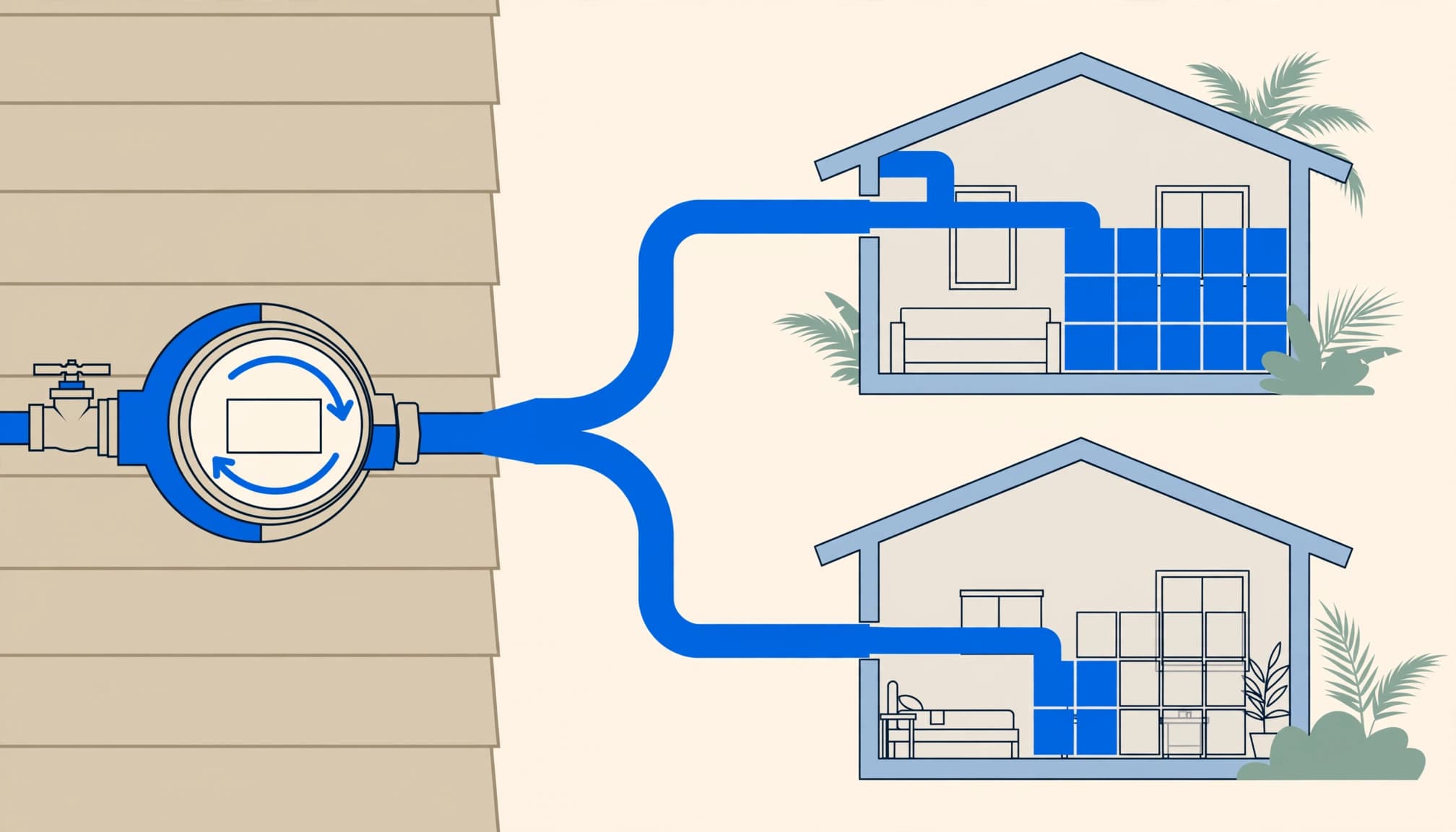
A landlord may keep an account and bill the resident under agreed terms. For a shared meter, a Ratio Utility Billing System (RUBS) allocates a master bill using factors such as occupancy or square footage.
Florida doesn’t generally prohibit RUBS, but the lease, utility rules, property arrangement, and billing method determine what’s permissible. Options include occupancy-based allocation, a fixed 60/40 square-footage split, or all-in rent. A submeter measures individual consumption instead of estimating a share.
Written Disclosures and Administrative Markups
A dependable billing process starts before the first reimbursement invoice arrives. Owners should document the method rather than rely on an informal explanation.
What the Utility Addendum Should Explain
We recommend a written addendum identifying shared meters, the allocation formula, billing frequency, due dates, and separate fees. It should explain how vacancies, common-area consumption, irrigation, and changes in occupancy affect the calculation.
Require itemized documentation with each invoice and provide a written dispute process. A seven-day response window can organize communications, but it isn’t a statewide statutory deadline and doesn’t replace legal rights.
Florida’s statute, Fla. Stat. § 83.46, addresses rent and tenancy duration. It doesn’t itself create a RUBS disclosure mandate or a universal right to inspect every master bill. Disclosure and document-access obligations depend on the agreement, utility-provider requirements, and applicable local rules.
Whether a Landlord Can Add a Markup
Chapter 83 doesn’t set a general percentage cap on residential utility-administration fees. That doesn’t mean every markup is lawful.
The lease is an important limit, but utility-specific rules also matter. Electricity resale can be subject to actual-cost restrictions under Florida Administrative Code Rule 25-6.049. An administrative label doesn’t automatically avoid those restrictions.
We recommend separating any agreed administrative fee from the utility reimbursement. Don’t describe a marked-up amount as the provider’s actual charge, and don’t assume lease language overrides utility regulation.
How to Check a RUBS Calculation
Start with the provider’s utility bill; verify the master bill’s service dates and current charges. Separate consumption charges, fixed service fees, prior balances, late fees, and adjustments.
Then identify which amounts belong in the allocation under the lease. A prior tenant’s unpaid balance shouldn’t silently become part of the current month’s shared consumption.
The arithmetic for a 60/40 allocation is straightforward:
| Calculation Component | Amount |
|---|---|
| Allocable master bill | $300 |
| Unit’s agreed share | 60% |
| Utility reimbursement: $300 × 0.60 | $180 |
| Separately stated administrative fee | $10 |
| Total, only if the fee is permitted | $190 |
The $10 difference is a separate charge, not additional utility consumption.
For equal-unit allocation, divide the allocable bill by participating units. For square-footage allocation, divide the unit’s area by the total participating area, then multiply by the allocable bill. Occupancy-based calculations require the agreed occupancy counts.
How to Dispute a Utility Charge
A written dispute gives both parties a clearer path to resolution. Keep the invoice, lease, calculations, and communications together.
- Request the supporting records. Ask for the master bill, total billed amount, service period, available meter readings, and the formula used to calculate your share. Ask for administrative fees to be listed separately.
- Recalculate the charge. Apply the agreement’s method, such as dividing by units, square footage, or occupancy. Compare your result with the invoice and identify any unexplained difference.
- Dispute the amount in writing. Include the invoice date, disputed amount, relevant lease provision, and correction you’re requesting. Don’t cite §83.46 as though it establishes a RUBS disclosure right.
- Choose the appropriate escalation route. For complaints about utilities it regulates, contact the Florida Public Service Commission at 850-413-6100 or 800-342-3552. The PSC doesn’t necessarily decide private landlord reimbursement disputes.
A lease-based money dispute may belong in county court. Florida’s small claims procedures cover claims of $8,000 or less, excluding costs, interest, and attorney’s fees. Parties can represent themselves.
Don’t assume a utility dispute allows you to withhold rent. Continue paying undisputed rent under the lease, and get legal advice if you receive a payment demand or eviction notice.

Warning Signs That Deserve a Closer Look
These concerns call for documentation, not an automatic conclusion that the charge is unlawful:
- The invoice doesn’t identify its service period or allocation method.
- Charges rise roughly 20% without an explanation, rate change, or corresponding usage increase.
- The lease doesn’t describe shared billing, or the formula changes mid-lease without contractual authority or agreement.
- A third-party billing company sends charges without supporting calculations.
- The landlord refuses supporting records or mixes prior balances with current consumption.
A billing company is common in managed properties. Its involvement alone doesn’t prove overcharging. Likewise, a percentage increase is a review trigger, not a legal threshold.
Utility Shutoffs Are Prohibited Collection Tactics
A landlord can’t interrupt utility service, including electricity, gas, or water, to pressure a resident to pay or leave. This rule applies even when the account is in the landlord’s name.
The Section 83.67’s prohibited-practices rules prohibit utility interruptions during a tenancy, except for bona fide repairs, construction, or emergencies. They also restrict lockouts and other self-help measures. A violation can cost the landlord actual and consequential damages or three months’ rent, whichever is greater, plus costs and attorney’s fees.
Local utility-provider policies may separately govern account changes and service restoration, but they don’t alter this statewide restriction. Owners should use the applicable notice and court process for enforcement. Residents facing a shutoff should preserve messages, account records, and evidence of the interruption.
Keeping the utility account in the owner’s name doesn’t give the owner permission to disconnect an occupied rental over a billing dispute.
Final Utility Bills, Move-Out, and Security Deposits
A final bill can arrive after the resident leaves. The invoice date alone doesn’t determine who owes it.
Match Charges to the Responsibility Period
Compare the service period with the lease, termination agreement, and possession-return date. Charges for earlier usage may remain payable even when billed later.
Prorated rent through an agreed date and a scheduled move-out inspection can support an accepted surrender, but they don’t automatically release every remaining obligation. Leaving early doesn’t necessarily end the lease.
For month-to-month tenancies, §83.57 requires at least 30 days’ written notice before the monthly rental period ends. Shorter notice doesn’t meet that requirement.
At move-in and move-out, photograph meter readings with dates and times. Match the stop-service date to the agreed end of responsibility, and document any owner account transfer. Keep turnover electricity and contractor usage separate from the departing resident’s charges.
Keep Deposit Deadlines Separate
Under Florida’s security deposit requirements, §83.49 generally requires a return within 15 days after the lease ends or the tenant vacates, whichever occurs later, if the landlord makes no claim.
For a claim, send the required notice within 30 days after the later of lease termination or vacancy. Use certified mail or personal delivery; email is allowed when statutory consent requirements are met. The tenant has 15 days after receipt to object in writing.
A delayed utility invoice doesn’t extend these deadlines. Missing the claim-notice deadline can forfeit the right to deduct from the deposit, although a separate damages action may remain available.
We recommend keeping the lease, ledger, meter photos, provider invoices, notices, and delivery records together.
Frequently Asked Questions
Does a Landlord Have to Show the Actual Bill?
Request it in writing, along with the calculation. The lease and applicable utility rules determine enforceable access rights; §83.46 doesn’t create a universal master-bill inspection requirement. Owners should provide supporting documentation to make reimbursements understandable.
Can the Billing Formula Change During the Lease?
A landlord shouldn’t replace an agreed formula merely because another method produces more revenue. Changes need contractual authority or an appropriate written agreement. A change in the provider’s rates is different from changing how costs are divided.
Who Pays for Utilities After the Tenant Leaves?
Responsibility follows the agreement and the period covered by the charge. A landlord-held account doesn’t automatically make every charge the owner’s expense, but a late-arriving invoice doesn’t automatically make post-tenancy consumption the former resident’s responsibility.
Clear Utility Billing Protects the Rental Relationship
Reliable utility billing connects written terms, accurate calculations, and complete records. That gives owners dependable accounting and residents a fair explanation of what they owe.
At Best Investing Realty, we help Southwest Florida owners with leasing, rent collection, accounting, and maintenance coordination. You can discuss your property management needs with our team and build utility responsibilities into a more organized rental process.