
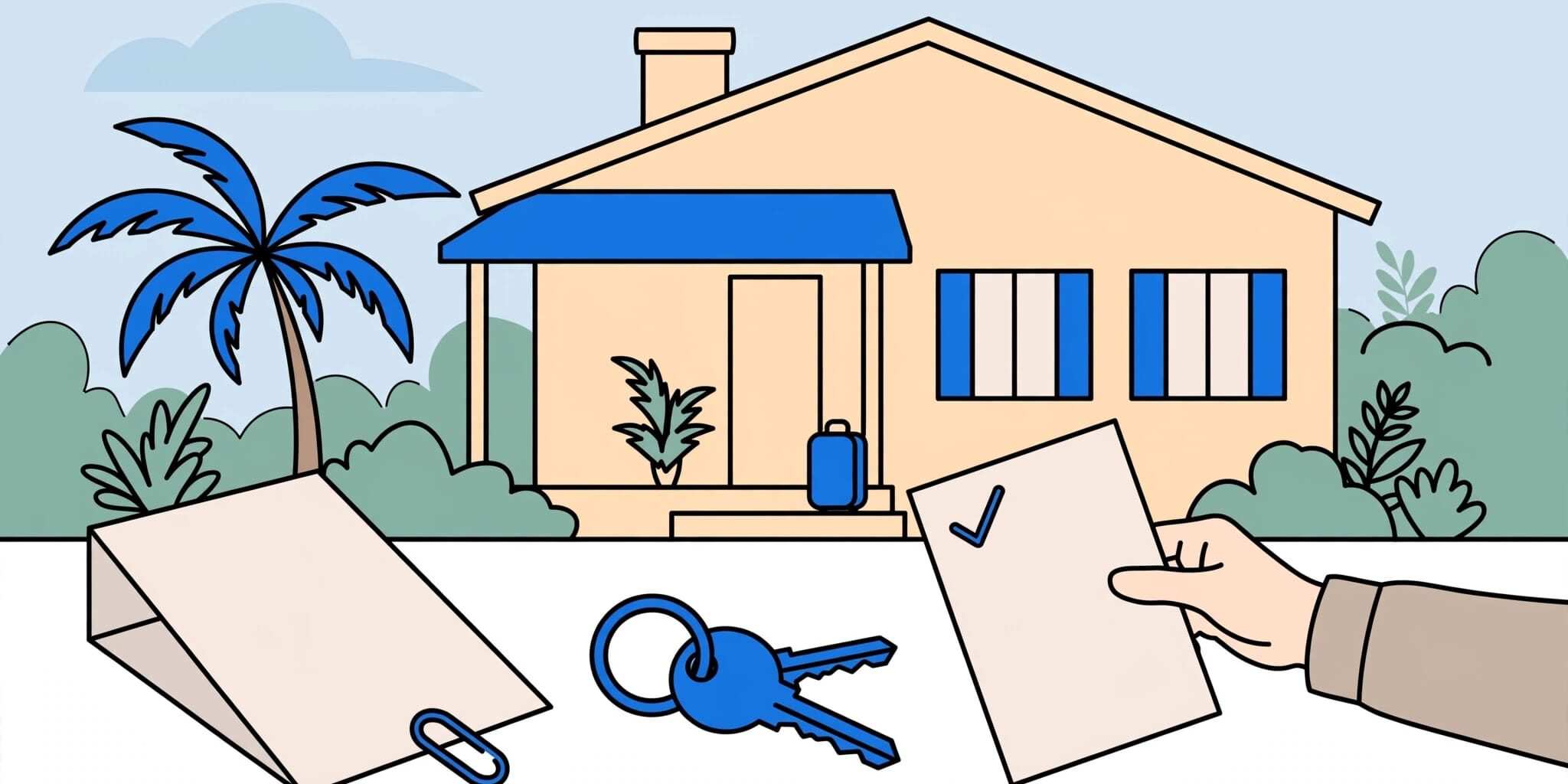
A Florida tenant can’t sublet without permission when the lease requires the landlord’s prior consent. The lease determines whether the tenant must obtain landlord written consent before subletting, since Florida’s residential statutes don’t set one universal written-consent rule for every sublease.
We recommend getting written permission before move-in, even when an arrangement seems straightforward. For tenants and rental owners, a clear agreement prevents confusion about occupancy and financial responsibility. Start by separating what the lease allows from what the parties have merely discussed.
Key Takeaways
- Permission depends on the lease, so a sublease agreement between occupants doesn’t replace required landlord approval.
- A qualifying curable violation generally requires seven days to correct it before termination.
- A termination notice isn’t an eviction order, and an occupant’s legal status determines the proper possession procedure.
Get Written Consent Before Subletting
A sublease lets another person rent all or part of the home through the original tenant. Adding someone as a co-tenant to the landlord’s lease agreement creates a different arrangement. A roommate agreement between occupants doesn’t add someone to the landlord’s lease.
Start With the Lease Language
Check the lease terms on subletting, assignment, guests, and additional occupants. These clauses may require approval even when the original tenant stays in the home and rents only a bedroom.
Permission may already appear in the lease, or the landlord may approve a particular arrangement through a signed addendum. However, general permission to have guests doesn’t necessarily authorize a paying subtenant. Association restrictions may also affect whether the proposed occupancy is allowed.
Put the Approved Arrangement in Writing
We recommend a written request identifying the proposed occupant, intended dates, and whether the arrangement covers a room or the entire home. The landlord’s response should clearly identify what is approved and any conditions.
A sublet agreement between occupants doesn’t replace approval required by the landlord. A tenant’s message saying “the landlord approved” isn’t itself approval from the landlord. Retain the landlord’s own written authorization to avoid disputes about verbal conversations.
Whether the tenant has a term lease or a month-to-month tenancy, the sublet can’t extend beyond the tenant’s lawful occupancy rights, including after an effective non-renewal notice.
What Happens After an Unauthorized Sublet?
An unauthorized sublet may be a lease violation and, in ordinary terms, may involve breaking a lease. The lease terms and facts determine the available remedy, including whether the breach is curable under Florida law.
A Curable Violation Generally Gets Seven Days
Under Florida Statutes section 83.56, a material violation that should be curable generally requires a written notice to cure. The seven day notice must allow seven days from delivery to correct the violation.
The practical sequence is:
- Identify the violated lease provision and document the unauthorized occupancy.
- Deliver the appropriate notice describing the violation and allowing the required cure period.
- Determine whether the tenant corrected the breach before pursuing termination and possession.
These are calendar days, unlike the separate three-day unpaid-rent notice calculation. A request for approval alone doesn’t correct a violation if the required approval never follows.
Qualifying Repeated Violations Can Support Termination
A similar subsequent or continuing violation within 12 months after a written warning can support termination without another opportunity to cure. The applicable notice gives the tenant seven days after delivery to vacate.
This doesn’t mean every repeated occupancy dispute automatically qualifies. The warning, conduct, and statutory grounds must support the selected notice.
If the tenant remains, the landlord must pursue the lawful court process. Changing locks or shutting off utilities isn’t a substitute.
Eviction or Unlawful Detainer Depends on Occupant Status
The absence of a landlord-signed lease doesn’t automatically make unlawful detainer the correct remedy. Residential tenancies can exist without a written lease directly between the property owner and occupant.
Florida’s Chapter 82 possession rules exclude residential tenancies governed by Chapter 83, Part II. Therefore, an unauthorized occupant and a transient occupant aren’t interchangeable categories.
We recommend involving a Florida landlord-tenant attorney when a subtenant disputes possession or the contractual relationships are unclear. The filing must match the occupant’s legal status and the relief sought. Choosing the wrong procedure can delay recovery of the property and increase costs.
Keep Rent and Security Deposits Clearly Accounted For
Before approving a sublease, document who makes rent payments, where they go, and how they’re credited. The arrangement should clarify tenant liability, including whether the tenant named on the original lease remains responsible. If the signed lease imposes joint and several liability on named tenants, a sublease doesn’t by itself release a tenant from those obligations.
We recommend dated condition photographs and written check-in and check-out records. Document any security deposit exchanged between occupants. Changing occupants doesn’t automatically require the owner to refund or transfer the existing security deposit.
Under Florida’s residential landlord-tenant statutes, section 83.49 governs deposit handling. When the tenancy ends and possession returns, the landlord generally has 15 days to return the deposit if making no claim. If claiming against it, the required notice generally must go out within 30 days.
Keep the lease, ledger, inspection records, and delivery evidence together. Deductions need support, and ordinary wear isn’t tenant damage.
Frequently Asked Questions
Can a Florida Tenant Add a Roommate Without Telling the Landlord?
The lease controls whether additional occupants need approval. Calling someone a roommate doesn’t avoid an occupancy restriction. We recommend documenting the approved arrangement before the person moves in, whether through an occupancy addendum or another appropriate agreement.
Can a Landlord Deny a Proposed Subtenant?
Yes, when the lease permits the landlord to withhold approval and the decision complies with applicable law. Permission to request a sublease doesn’t guarantee acceptance. Owners should apply lawful screening standards consistently and document the decision rather than rely on informal conversations.
Protect the Rental With a Clear Written Agreement
A Florida sublet should begin with the lease and required approval, not an informal handoff of keys. If a violation occurs, the correct notice and possession process matter as much as the lease language.
Our team can help owners organize leasing, screening, and rental records. Contact our property management team for support with your Southwest Florida rental home.