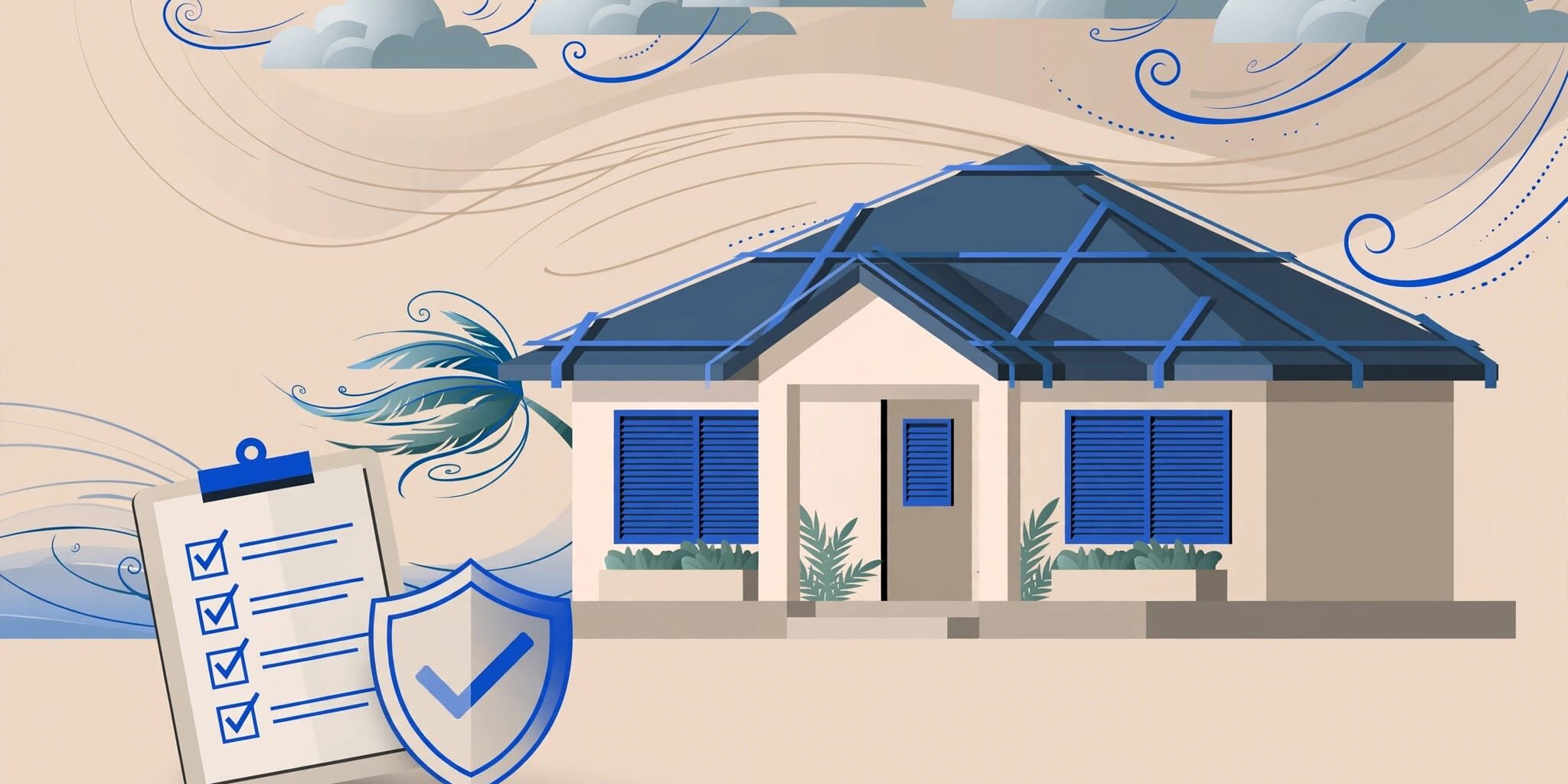
A rental home can produce strong income and still lose ground when insurance premiums rise. Wind mitigation credits can reduce the eligible wind-related portion of a Florida property policy when the home has verified features that better resist hurricane-force winds.
For investors, this is more than an insurance detail. A rental may carry a landlord policy rather than a homeowners policy, so the applicable homeowners insurance premium and eligible windstorm portion depend on the policy form and insurer. Credits generally apply only to the eligible portion of wind-related coverage, and they don’t guarantee a specific total-policy savings amount. A current inspection report can support better underwriting before closing, help improve cash flow after upgrades, and keep policy records ready when renewal time arrives.
How Wind Mitigation Credits Work for Rental Properties
Florida insurers use verified construction details to determine available hurricane-loss mitigation discounts. A credit is a property- and policy-specific adjustment to the eligible windstorm portion of a windstorm premium. It isn’t a general reduction to every part of a homeowners insurance premium or the same as broader insurance discounts.
The credit is tied to the building, not to whether you live in the home, but the policy type and carrier rules still matter. Savings can vary by state, insurer, location, construction type, inspection findings, documentation, and policy terms.
A long-term rental may be insured under a dwelling fire policy, often called a DP-3 policy, or another landlord policy. A short-term or vacation rental may need specialty coverage. Don’t assume a credit transfers automatically from a seller’s or prior policy, or applies the same way to every rental policy.
The Florida homeowners insurance overview confirms that policyholders may request a wind mitigation inspection to identify the wind mitigation credits they qualify to receive. Before scheduling one, ask the insurance company or agent whether the policy accepts the report and which discounts may apply.
A wind mitigation report supports a premium credit, but it doesn’t replace flood insurance, loss-of-rent coverage, or a reserve for a hurricane deductible.
Features That Can Support Insurance Discounts
A wind mitigation inspection documents the home’s existing construction. Some features are visible from the exterior, while others may require attic access, permits, contractor records, or clear photos.
Roof Shape and Roof Deck Attachment
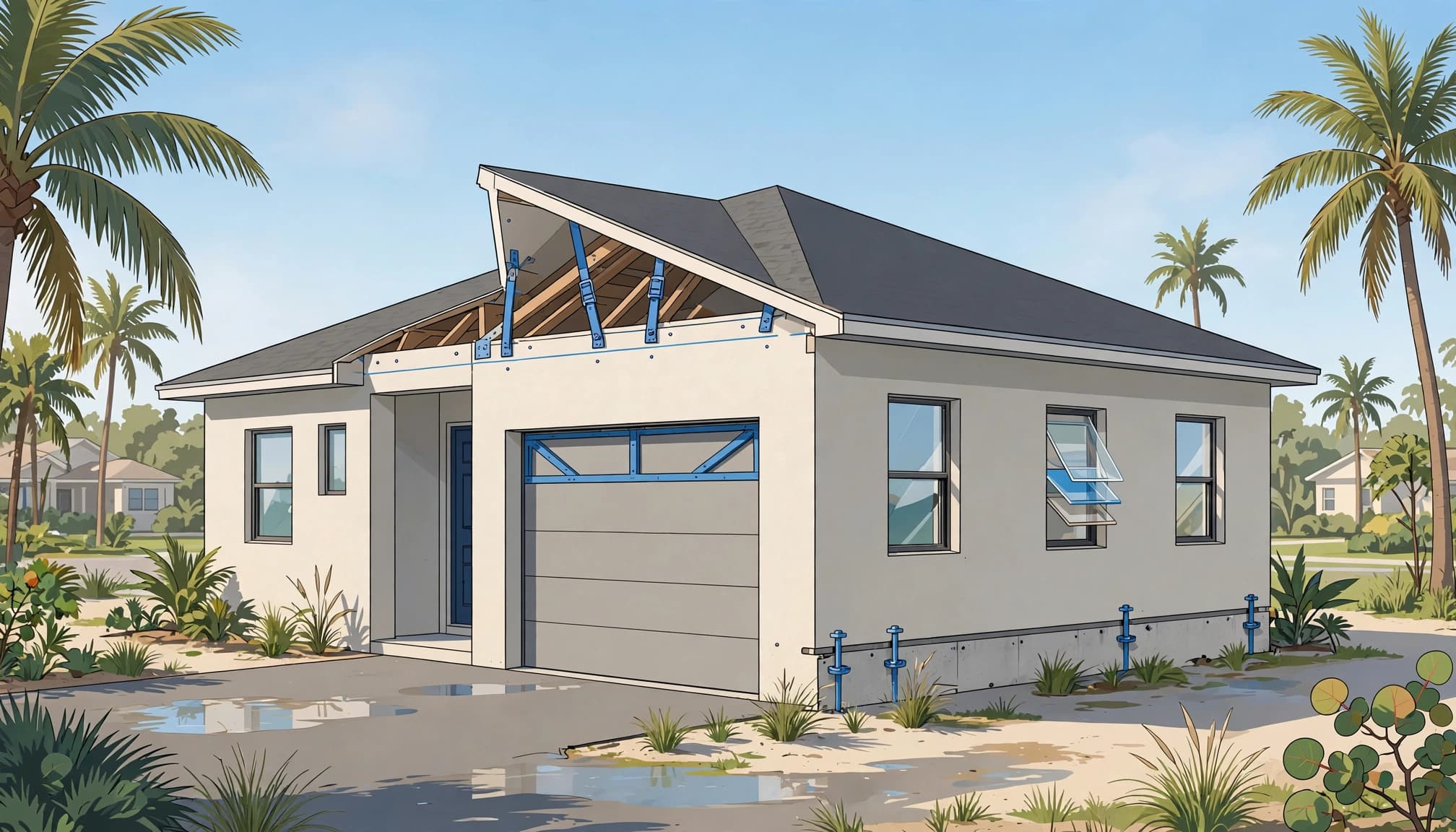
Roof shape can influence how wind moves across the home. A hip roof slopes down on all sides, giving wind fewer large vertical surfaces to push against than a gable roof with flat triangular ends. A hip roof can still require proper construction details and documentation.
Inspectors also look at roof deck attachment. This covers how the roof sheathing is fastened to the framing, including nail type and spacing. Better fastening patterns can help the roof deck stay attached under high wind pressure.
Roof covering age and condition remain important for insurance, but they are not the same as wind mitigation credits. Keep roof permits, invoices, warranties, and final inspection records with your insurance file.
Roof-to-Wall Connection and Water Barriers
The roof-to-wall connection is where the roof framing meets the wall framing. Hurricane clips, single wraps, double wraps, straps, or other approved connectors can improve resistance to wind uplift.
A secondary water resistance layer may also qualify for a credit when properly documented. This layer sits beneath the roof covering and can limit water intrusion if shingles or tiles blow off during a storm.
These details may be hidden once the home is finished. If an inspector can’t verify the roof-to-wall connection, permits, construction photos, or engineering records may help. Records may also show compliance with the Florida Building Code. Local building code records can support review, but code compliance alone doesn’t guarantee a credit.
Opening Protection Requires Complete Documentation
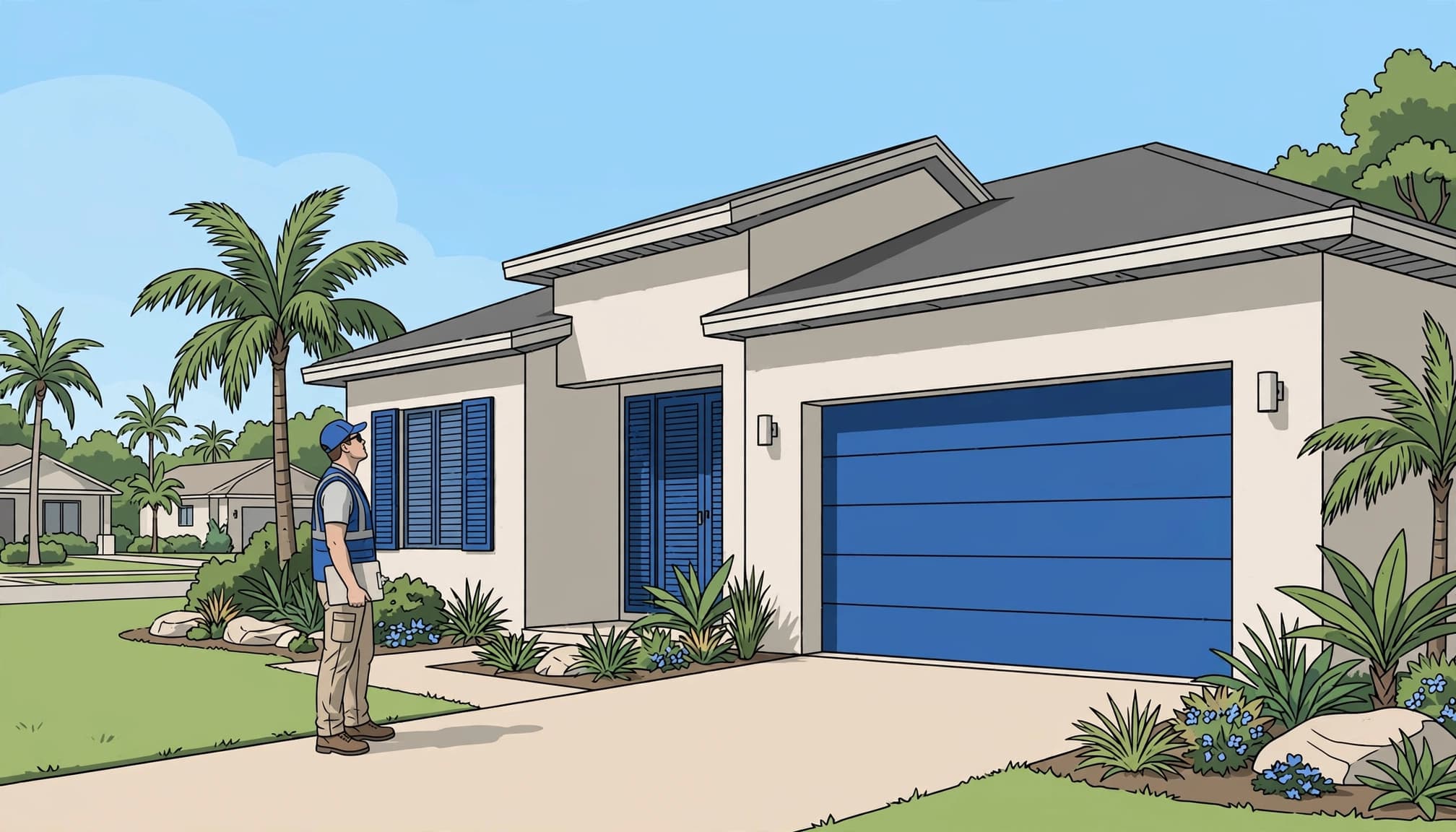
Opening protection includes impact-resistant windows, rated exterior doors, hurricane shutters, skylights, and reinforced garage doors. This category can affect available wind mitigation credits, but documentation must match the insurer’s requirements.
For an opening-protection discount, the insurer may need proof for every applicable opening it reviews. Each feature must be verified under the carrier’s rules. One unprotected window, missing product approval, or undocumented garage door can limit the credit for that category.
We recommend keeping shutter permits, product approvals, invoices, photographs, and construction records in one folder. A home may have strong storm protection, but the insurer can only apply features the report clearly verifies.
Getting a Wind Mitigation Inspection Done Right
A wind mitigation inspection is usually straightforward, but preparation makes a real difference. Give the inspector access to the attic, garage, exterior openings, and records tied to roof or window work.
Hire Someone Authorized to Complete the Form
The report must be completed and signed by a qualified professional authorized to perform this work. Florida materials identify professionals such as a licensed inspector, certified inspector, contractor, or engineer, but credentials and permitted scope vary.
Ask the inspector whether they complete the current Florida form and have the license, certification, or other authorization required for the work and accepted by the carrier. Request a signed inspection report with labeled photos. A low price isn’t helpful if the report is incomplete or the carrier won’t accept it.
Pricing isn’t set statewide. Request a written quote and confirm whether the fee includes attic access, photos, a revised report if a correction is needed, and delivery of the final signed form.
Ask how the completed report may affect applicable premium discounts and the rental or landlord-policy homeowners insurance premium.
Use the Current 2026 Inspection Form
For inspections completed on or after April 1, 2026, Florida uses the uniform mitigation verification inspection form, OIR-B1-1802, Rev. 04/26. The state’s premium discount guidance explains the 2026 form update.
An older valid report may still be accepted within its five-year period, depending on the inspection date and carrier rules. Don’t pay for a new inspection only because a form changed. First ask the insurer whether the existing report remains usable.
Sending the Report to the Insurance Carrier
Once the wind mitigation inspection is complete, send the full signed inspection report and supporting photos to the insurance company or its licensed agent. Keep the original file, submission confirmation, and updated declarations page.
Ask for a Mid-Term Policy Review
You don’t have to wait for renewal after installing approved shutters, replacing a garage door, adding roof straps, or correcting roof deck attachment. Ask whether the carrier can review the report mid-term.
The carrier may adjust only eligible charges for the remaining policy term. A homeowners insurance premium may change, though a rental may have a landlord-policy premium instead. Any adjustment depends on underwriting, effective dates, documentation, and policy terms. Ask for the effective date in writing, then compare the revised premium with the prior declarations page.
Check That the Credit Was Actually Applied
A report in your inbox doesn’t mean the discount reached the policy. Review the premium, forms, and credits listed on the updated declarations page or renewal offer.
If the result seems incomplete, ask the carrier which inspection feature wasn’t accepted and why. Common issues include unclear photos, missing permits, unverified product approvals, a wrong roof geometry selection, incomplete opening-protection evidence, or a form that wasn’t signed correctly.
Choosing Improvements That Fit the Property
Not every improvement produces the same return. Start with the inspection report and carrier feedback, then price the work against realistic insurance savings, maintenance needs, and the home’s long-term plan.
Fix Documentable Gaps First
A third nail, gable-end bracing, improved roof-to-wall connection, or a reinforced garage door may be practical improvements when a qualified contractor confirms the property can support them. These projects should have permits and final records where required.
Avoid spending based on a promise of a certain discount. Ask the insurer how it treats the proposed feature, then keep product approvals, contractor invoices, permit records, and photographs after completion.
Treat Windows and Shutters as a Whole-Home Decision
Impact-resistant windows and doors can improve protection, but they are a larger capital project than adding a few clips or braces. If you choose hurricane shutters, confirm the products are approved for the home and cover the needed openings.
For a rental, durable storm protection can also reduce last-minute tenant coordination before a storm. Still, tenants should receive clear instructions about what they may and may not install, remove, or operate.
Keep Insurance in the Rental Cash Flow Model
Wind mitigation credits can lower an eligible portion of a homeowners insurance premium, but they don’t make storm risk disappear or guarantee a fixed savings amount. A rental may instead be priced under a landlord policy. We include premiums, flood coverage, loss-of-rent coverage, repairs, vacancy, and reserves in the property’s operating model before relying on projected rent.
Review Deductibles in Actual Dollars
Florida hurricane deductibles can be percentage-based. A 5% hurricane deductible on a $400,000 dwelling limit equals $20,000 out of pocket before covered repairs begin.
Ask whether the policy has separate all-perils, windstorm, hurricane, and roof deductibles. They may not apply to the same events. Loss-of-rental-income coverage also deserves a close review because a storm-related vacancy can affect the investment long after repairs begin.
Protect the Pre-Claim Record
Keep the wind mitigation report with dated photos or video showing the home’s condition before storm damage occurs. Add roof records, maintenance invoices, inspection reports, lease documents, rent records, and proof that tenants carry renters insurance when required by the lease.
These records can help support a claim, explain the property’s condition, and keep communication clearer among the owner, manager, insurer, and contractor.
Inspection Validity, Renewals, and Available Grants
A completed wind mitigation inspection is generally valid for up to five years if there are no material structural changes or inaccuracies. The Florida Department of Financial Services explains this timeframe in its inspection and form guidance.
Revisit the Report After Major Work
Order a new inspection report when you replace the roof, install impact protection, change the garage door, or complete structural improvements that may affect credits. A five-year-old report can remain valid, but it can’t document work completed afterward.
Review the policy before every renewal. Confirm the dwelling limit reflects rebuilding cost rather than market value, check loss-of-rent limits, and verify that the named insured, mortgagee, property address, and management contact are correct.
Understand the My Safe Florida Home program
The My Safe Florida Home program provides inspections and grant support for eligible Florida homeowners who complete approved hardening improvements. The Florida Legislature allocated $180 million for the program during fiscal year 2025-2026.
Rental-property eligibility, funding availability, approved improvements, and application requirements can differ from owner-occupied homes. Check the current program rules, including how insurers may treat funded improvements, before relying on grant support or projected insurance savings.
Key Takeaways
- Wind mitigation credits depend on a property’s verified construction features and the carrier’s policy rules.
- A current OIR-B1-1802 report, clear photos, and complete records give insurers what they need to review the credit.
- Roof shape, roof deck attachment, roof-to-wall connections, secondary water resistance, and opening protection are major inspection categories.
- Review a new report after meaningful upgrades and confirm the revised credit appears on the policy.
- Model the applicable homeowners insurance premium separately from deductibles, flood insurance, loss of rent, and storm reserves.
Frequently Asked Questions About Wind Mitigation Credits
Can a DP-3 Rental Policy Receive Wind Mitigation Credits?
It may, but coverage and credit rules vary by carrier and policy form. A credit may reduce an eligible portion of the applicable homeowners insurance premium, but a rental landlord policy isn’t necessarily treated like an owner-occupied homeowners policy. Confirm that the insurer accepts the inspection report for the exact rental policy, especially if the home is furnished, tenant-occupied, or used for short-term stays.
Does a Wind Mitigation Inspection Cover Flood Risk?
No. A wind mitigation inspection focuses on features that reduce wind and wind-driven rain damage. Flood damage is generally covered by a separate flood policy, so owners should review the actual address, elevation, drainage history, and flood zone independently.
What Happens if an Insurer Rejects Part of the Report?
Ask for the reason in writing. The issue may be a missing photo, unclear product approval, incomplete opening-protection documentation, or a form error. A qualified inspector may be able to correct factual mistakes, while a contractor may need to provide records for completed work.
Build a Stronger Insurance Position
Wind mitigation credits are most useful when they are part of a complete rental-property plan. The right report can support lower eligible wind costs, while careful policy reviews protect against overlooked deductibles, missing coverage, and outdated property information.
For help reviewing the practical side of a Southwest Florida rental investment, including records, property condition, and ongoing management needs, contact Best Investing Realty. A well-documented home gives you a stronger position before renewal, before a storm, and before an insurance claim.