
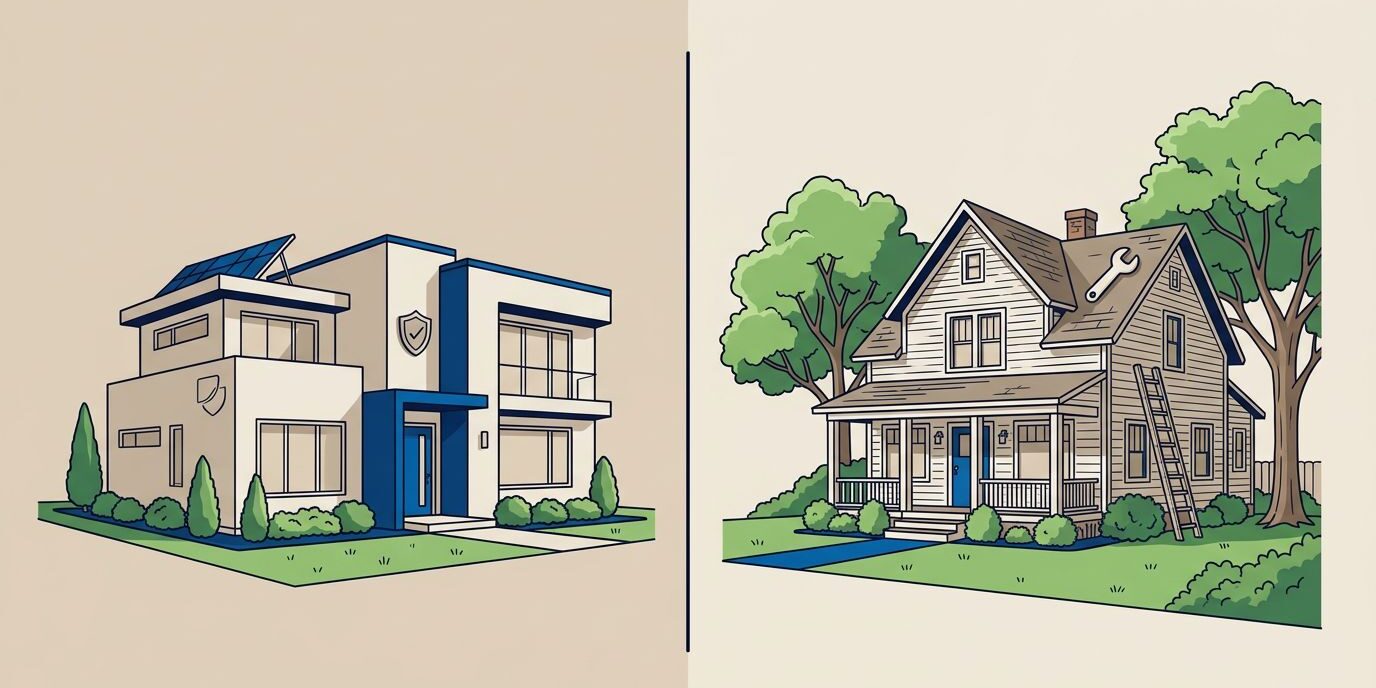
A rental property can look profitable on a listing sheet, yet maintenance costs, insurance, repairs, vacancy, management costs, and property taxes can erase expected returns. For investors, the new vs older homes decision is less about appearance and more about dependable income over several years.
New construction often offers lower early maintenance and stronger energy performance, while older homes may provide better locations, larger lots, and established tenant demand. We recommend comparing new construction and existing homes through the same rental model before you buy.
Key Takeaways
- New construction can offer lower early maintenance, better energy efficiency, modern features, and builder warranties, but it may come with a higher purchase price, HOA fees, and smaller lots.
- Older homes may provide stronger locations, larger lots, mature landscaping, and established tenant demand, but they require more detailed inspections and larger repair reserves.
- Compare properties using the same three-case cash flow model, including taxes, insurance, flood coverage, utilities, vacancy, management, maintenance, reserves, and debt service.
- In Southwest Florida, evaluate storm exposure, flood risk, roof age, building features, and address-specific insurance quotes before buying.
- The best rental investment is the property that maintains reliable cash flow after realistic operating costs, repairs, vacancies, and financing are included—not necessarily the newest or least expensive home.
New vs Older Homes for Rental Investment
The right property depends on your budget, target tenant, neighborhood, and tolerance for repairs. Choosing between new construction homes and existing homes also matters, while resale value remains a secondary consideration. A newly built home may be easier to operate, but an older home in a stronger location can produce better long-term results.
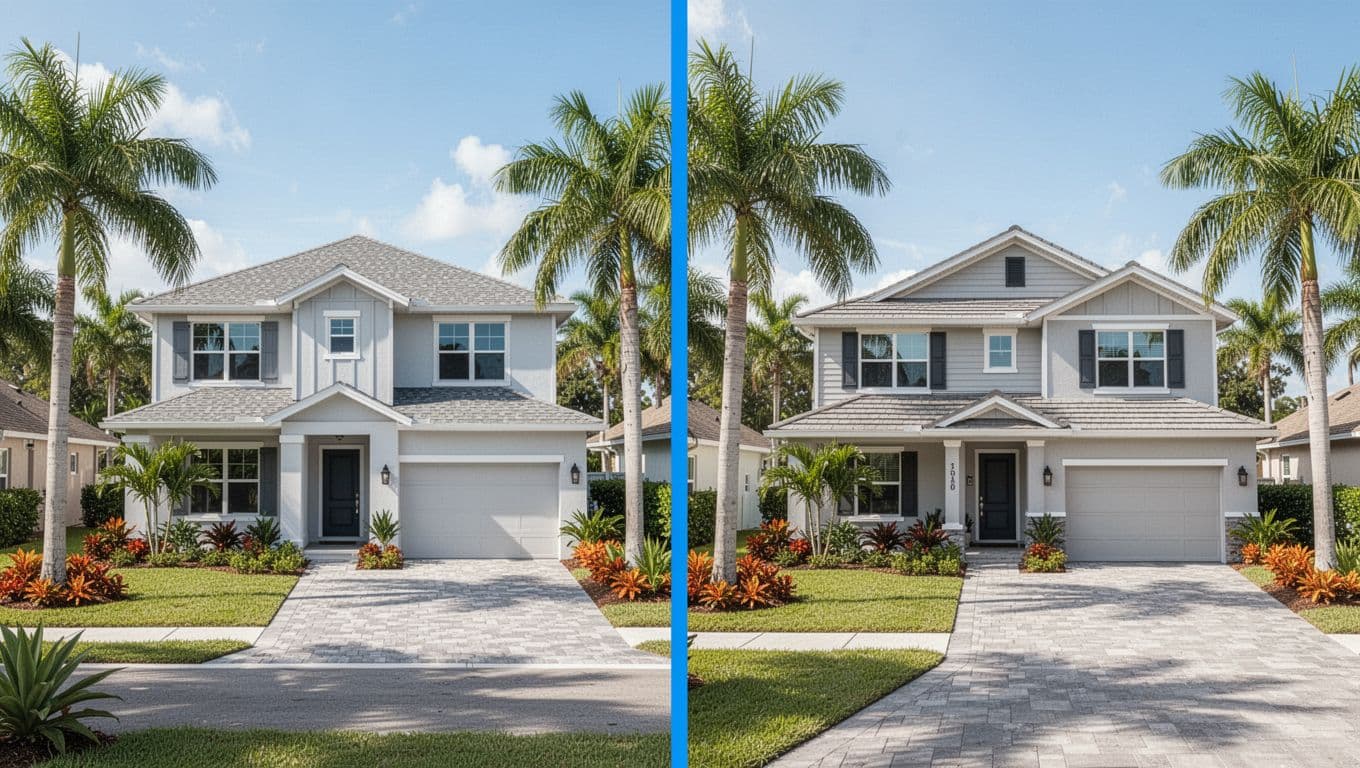
Why New Construction Can Simplify Operations
New homes typically include newer plumbing and electrical systems, along with modern appliances, roofing, windows, and air conditioning equipment. Those systems aren’t guaranteed to remain trouble-free, but they may reduce the number of major replacements during the first several years.
New construction can also provide:
- Builder warranties for selected materials, systems, and structural components.
- Modern layouts with open floor plans, dedicated laundry areas, and practical storage.
- HVAC systems, windows, insulation, and appliances designed to support energy efficiency and lower operating demands.
- Less immediate work before advertising the property to tenants.
- New community amenities that may support tenant interest, even with a smaller lot size.
For an investor building a portfolio, predictable maintenance can make budgeting easier. A new property may also appeal to tenants who want clean finishes, updated technology, and fewer concerns about aging systems.
Where Older Homes Can Win
Older homes often sit in established neighborhoods near schools, employment centers, shopping, parks, and major roads. That location can reduce commute times and support steadier rental demand, even when the home lacks smart home technology or a brand-new interior.
Mature trees, larger lots, original hardwood floors, and architectural character can also make an older property stand out. In some neighborhoods, the land and location are more valuable than the age of the structure.
The tradeoff is that older homes require more careful due diligence. A lower purchase price doesn’t help if the property needs a roof, electrical panel, plumbing work, windows, or structural renovations soon after closing.
Compare Total Costs, Not Purchase Price
Are new construction homes more expensive upfront? Often, yes. Their up-front costs may be higher. New developments sometimes have smaller lots or HOA fees, while builder incentives can lower the effective acquisition price. However, older homes can absorb that initial price difference through maintenance costs, insurance changes, utility bills, especially heating and cooling costs, and turnover work.

A useful comparison includes the costs shown below.
| Cost Area | New Construction | Older Home |
|---|---|---|
| Purchase price | Often higher | May be lower |
| Early repairs | Usually limited | May be immediate |
| Utilities | Often lower | May be higher |
| Insurance | Depends on roof, location, and features | May rise with age and outdated systems |
| HOA costs | Common in new communities | Varies by neighborhood |
| Lot size | Often smaller | Frequently larger |
| Tenant appeal | New finishes and amenities | Location and character |
| Reserves | Lower early replacement needs | Higher near-term reserve needs |
Build a Three-Case Cash Flow Model
We don’t recommend relying on one rent estimate or one optimistic expense forecast. Run conservative, expected, and strong cases using different assumptions for rent, vacancy, repairs, insurance, and occupancy.
Your model should include:
- Purchase price, closing costs, financing, and initial improvements, including structural renovations when needed.
- Property taxes based on current records and possible reassessment.
- Insurance using the actual address, roof age, construction type, and replacement cost.
- Flood coverage when applicable, modeled separately from standard property insurance.
- Property management, leasing, maintenance, lawn care, pool service, and HOA fees.
- Vacancy, turnover, appliances, capital reserves, and debt service.
Net operating income, or NOI, shows income after operating expenses and before mortgage payments. Cash flow goes further by subtracting debt service and planned reserves. A property can show strong rent and still produce weak monthly cash flow.
A $20,000 difference in projected annual expenses can matter more than a modest rent premium. Use actual quotes wherever possible, then compare both homes under the same assumptions.
Maintenance, Energy, and Insurance Need Separate Analysis
New construction doesn’t eliminate maintenance costs. It changes the timing and type of costs you may face. Older homes don’t automatically make poor rentals, but they require a stronger reserve plan and closer inspection.
Energy Efficiency and Utility Bills
New homes commonly have improved insulation, dual-pane windows, efficient HVAC equipment, and newer appliances. These features can lower heating and cooling costs and make monthly expenses more comfortable for tenants, particularly in Florida, where air conditioning operates for much of the year.
Properties of that age may use more energy because of aging ductwork, less insulation, older windows, inefficient appliances, or air leaks. The U.S. Department of Energy provides guidance on home upgrades that reduce energy use, but investors should still request property-specific information.
Review past utility records when available. Ask about the air conditioner’s age and service history, inspect ductwork, and check whether windows and doors close properly. If the property needs upgrades, include those costs in your acquisition budget instead of treating them as a future surprise.
Storm Exposure, Flood Risk, and Insurance
Southwest Florida investors need to evaluate wind and flood exposure separately. A newer roof and code-compliant openings may help with storm resilience, but they don’t eliminate flood risk or guarantee lower premiums.
As of August 2026, the 8th Edition Florida Building Code, which took effect in December 2023, remains current. The 9th Edition is scheduled to take effect on December 31, 2026. Review current building codes in the Florida Building Code’s current materials and confirm permit requirements with the local building department.
Permit timing may affect specifications for roofs, windows, doors, and other parts of the building envelope. A project permitted after a code change may have different requirements than a similar project permitted earlier.
For every property, request address-specific home insurance quotes using:
- Roof age and roof covering.
- Construction type and replacement cost.
- Elevation and flood zone.
- Wind mitigation features.
- Distance from tidal water.
- Hurricane and flood deductibles.
Cape Coral, Fort Myers, Punta Gorda, and Port Charlotte deserve close attention because coastal and near-coastal exposure can affect both insurance and maintenance budgets. Lehigh Acres and Lake Placid may have different flood and storm profiles, but inland properties still need proper wind and roof review.
Older Home Risks Can Become Rental Expenses
A home inspection is important for both property types, but the checklist changes with age. New construction should be inspected before closing and again before warranty deadlines. Older homes need a clear view of remaining useful life.
For an older rental, inspect the roof, foundation, windows, HVAC, water heater, appliances, irrigation, and pool equipment. Review the plumbing and electrical systems, including supply lines, the sewer or septic system, and the electrical panel and wiring. Older properties may also need a clear assessment of potential structural renovations.
Check for prior permits and uncompleted work, especially when recent or unpermitted structural renovations are visible.
Homes built before 1978 may contain lead paint and asbestos. Renovation, repair, and painting work can create dangerous lead dust, so review the EPA’s Lead Renovation, Repair and Painting Program before planning improvements. Renovation work may require professional controls, and suspected materials deserve expert review.
A working system isn’t always a healthy system for your budget. An older air conditioner may cool the home today but create unexpected maintenance costs or need replacement soon. A pool pump, water heater, or irrigation controller may also fail without much warning.
Location and Tenant Demand Matter More Than Age
New communities often offer clean streets, common amenities, newer sidewalks, and attractive model homes. They may also have smaller lots, closer neighbors, construction activity, and HOA rules that limit leasing, pets, parking, or exterior changes.
Older homes in established neighborhoods usually offer mature landscaping, established services, and better access to daily needs. Historical charm and distinctive features may attract tenants, but they don’t automatically support higher rent. Tenants may value a shorter commute more than a new kitchen, especially when the property is close to employment, schools, healthcare, and daily shopping.
Match Features to Local Rent Demand
A feature helps only when its added rent exceeds its added upkeep. Cape Coral homes with pools, screened outdoor areas, canal views, or gulf access can attract strong attention, but each feature creates additional obligations.
Budget for pool cleaning, equipment inspections, irrigation, seawall work, docks, landscaping, pest control, and storm preparation. A waterfront home may earn more rent while producing lower cash flow if those expenses are underestimated.
Compare similar rentals by neighborhood, not only by bedroom count. Review achievable rent, days on market, concessions, tenant applications, HOA restrictions, and vacancy patterns. A property that rents quickly at a reliable price can outperform a more attractive home with a longer vacancy period. A desirable location may also offer appreciation value, but local market evidence should support that expectation.
Check Community Rules Before Closing
HOA restrictions can affect your rental plan before the first tenant moves in. Confirm minimum lease terms, approval procedures, rental caps, pet rules, vehicle restrictions, maintenance responsibilities, and fees.
New developments may have stricter rules because the community is still establishing standards. Older neighborhoods can have fewer restrictions, but they may still include deed limits or municipal rental requirements.
Due Diligence Protects the Investment
The best choice between a new build and an existing home becomes clearer after property-specific research. Review the inspection, insurance quote, current property taxes, flood information, HOA documents, permits, rental comparables, and projected maintenance reserves together.
For new construction, understand exactly what the builder’s home warranty covers, how long each component is protected, and when claims must be submitted. Keep all inspection records and complete warranty items before deadlines expire.
For older homes, negotiate documented repair needs, including structural renovations, rather than applying a generalized discount for age. A newer roof, updated electrical system, and recent HVAC replacement can make an older property a sensible investment. A low price with several aging systems may require too much capital.
Property management also affects the result. Reliable tenant screening, rent collection, inspections, maintenance coordination, accounting, and legal compliance help protect income after closing. Owners should keep clear records for repairs, invoices, leases, deposits, and recurring services to monitor maintenance costs.
Frequently Asked Questions
Are new construction homes better for rental investment?
New construction can simplify early operations because major systems, appliances, and finishes are newer and may be covered by warranties. However, a new home is not automatically the better investment if its purchase price, HOA fees, location, or rental demand produce weaker cash flow.
What are the main risks of buying an older rental home?
Older homes may need near-term work on the roof, HVAC system, plumbing, electrical components, windows, appliances, or structural elements. Investors should review inspections, permits, remaining useful life, and repair reserves before relying on a lower purchase price.
How should investors compare new and older homes?
Use the same rental model for both properties and include purchase costs, financing, taxes, insurance, flood coverage, utilities, management, vacancy, maintenance, capital reserves, and debt service. Run conservative, expected, and strong scenarios instead of relying on one optimistic rent or expense estimate.
Do newer homes have lower insurance costs?
Not necessarily, because premiums depend on the address, roof age, construction type, replacement cost, elevation, flood zone, and wind mitigation features. Request property-specific quotes and evaluate wind and flood coverage separately, especially in Southwest Florida.
Which property features matter most to tenants?
Location, commute times, access to employment and daily services, reliable condition, and achievable rent often matter more than whether a home is new. Pools, screened outdoor areas, waterfront access, and modern finishes can attract tenants, but they should be measured against their added maintenance and operating costs.
Conclusion
The choice between new construction and older homes for rental investment depends on total cost, tenant demand, storm exposure, and how much maintenance responsibility you want to carry. New homes can offer predictable early operations, while these properties may provide stronger locations, larger lots, and architectural appeal.
We recommend stress-testing both options with property taxes, insurance, flood coverage, repairs, vacancy, reserves, and financing. The strongest investment isn’t always the newest home or the cheapest one. It’s the property that continues to work when the forecast is less favorable.