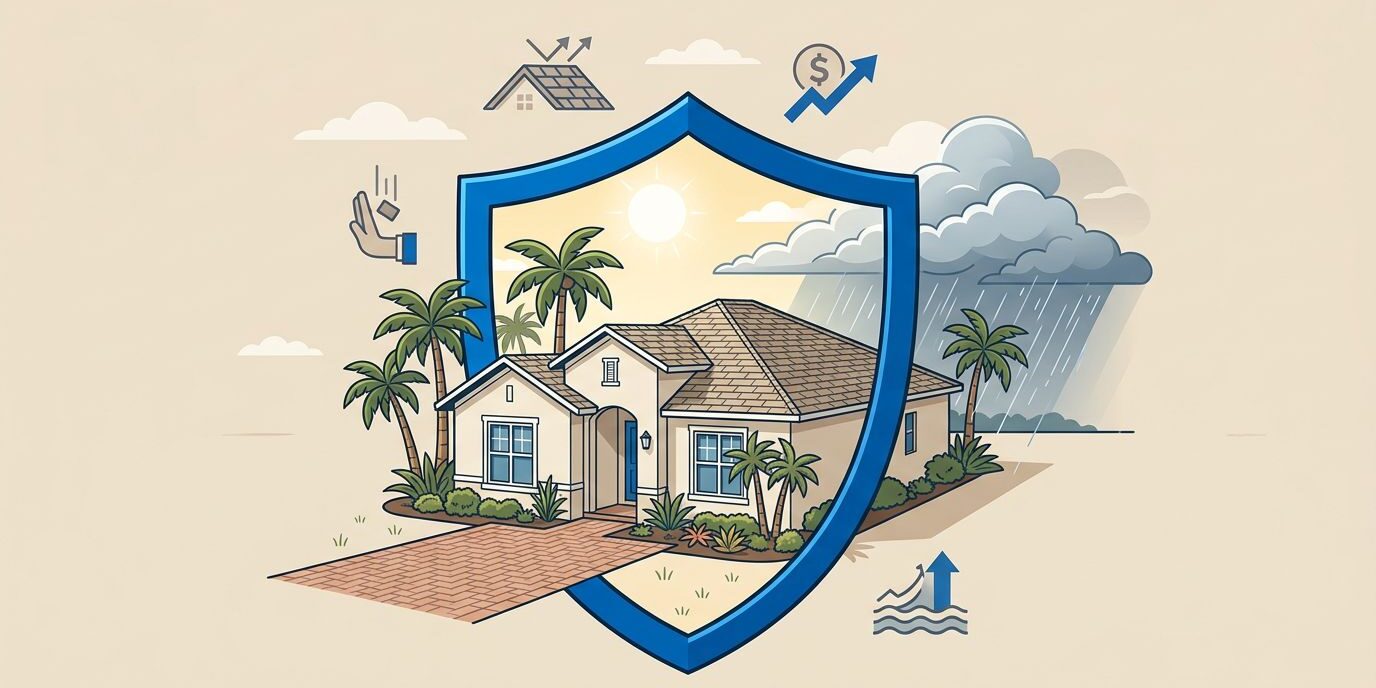
A rental property can show strong rent on paper and still lose money after a storm, roof claim, or year of rising premiums. That is why we treat Florida landlord insurance as part of the investment analysis, not a document to collect after closing.
The right rental property insurance protects the building, rental income, and your liability. The wrong deductible or missing flood policy can leave a serious gap. This checklist helps you compare coverage, review the roof, price the real cost, and keep the policy aligned with how you operate the rental.
We start with the policy form and legal requirements, then review coverage gaps and roof condition. From there, we look at the costs that affect your investment returns.
Key Takeaways
- Choose a dwelling or landlord policy designed for tenant occupancy rather than standard homeowners insurance, and confirm that the coverage matches your lease and rental strategy.
- Set dwelling coverage based on the property’s replacement cost, then review protection for other structures, landlord-owned property, lost rental income, ordinance or law costs, and liability.
- Treat flood, wind, hurricane, and roof risks as separate decisions. Standard Florida landlord insurance generally excludes flood damage, while percentage-based hurricane and roof deductibles can create significant out-of-pocket costs.
- Use the actual property address, roof records, inspections, flood information, occupancy details, and current replacement-cost estimates when comparing quotes.
- Include insurance premiums, deductibles, flood coverage, vacancy, repairs, and storm reserves in the rental property’s cash flow model, and review the policy at every renewal.
Start With the Policy and Legal Requirements
Florida doesn’t require every rental owner to purchase a policy labeled landlord insurance. Mortgage lenders typically require property insurance as a condition of financing. They may also require a separate flood insurance policy when the home is in a designated high-risk flood area.
Check the Loan, Lease, and Disclosure Requirements
Even without a mortgage, going uninsured places the building, rental income, and personal assets at risk. Review your loan documents for required dwelling limits, liability limits, deductibles, named insureds, and lender information.
Florida also requires a written flood disclosure for qualifying residential rental agreements with a term of one year or longer. Review the Florida flood disclosure statute and have your lease process reviewed by a qualified professional.
Your lease can also require renters insurance when the requirement is written clearly and applied lawfully. That coverage protects the tenant’s belongings, not your building or your liability.
Choose a Dwelling Policy Built for Rentals
Standard homeowners insurance is designed for an owner-occupied residence, not tenant occupancy. A rental needs a dwelling or landlord policy that recognizes tenant occupancy, rental income, and premises liability.
The policy form affects how much protection you receive:
| Policy Form | General Coverage Approach | Common Use |
|---|---|---|
| DP-1 | Basic named-peril coverage | Limited protection where price is the main concern |
| DP-2 | Broader named-peril coverage | A middle option with more listed causes of loss |
| DP-3 | Open-peril dwelling coverage, subject to exclusions | Common starting point for long-term rental owners |
Policy forms and endorsements vary by insurer, so the declarations page and full contract control. A DP-3 policy is often a useful starting point for long-term rental owners, but exclusions and endorsements determine the protection provided. It doesn’t automatically include flood, tenant belongings, or every type of water damage.
Confirm Every Coverage Your Rental Needs
A lower premium isn’t helpful when the policy leaves your largest risks outside the contract. We review each coverage against the property’s location, condition, financing, and rental strategy. Then we compare limits, the insurance deductible, and exclusions.
Protect the Building and Lost Rental Income
Set dwelling coverage using the property’s estimated replacement cost value, not its market value. Market value includes the land and neighborhood demand, while replacement cost focuses on rebuilding the structure after a covered loss.
Ask whether the policy includes:
- Dwelling coverage for the main home, roof, attached features, and covered systems.
- Other structures coverage for eligible detached garages, sheds, or similar improvements.
- Personal property coverage for landlord-owned furnishings, appliances, and maintenance equipment.
- Loss of rental income after a covered event makes the home uninhabitable.
- Ordinance or law coverage for added rebuilding costs caused by current building codes.
Also ask whether roof-related losses carry a separate roof deductible.
Loss-of-rent coverage deserves close attention. Check the rental income coverage, waiting period, payment limit, coverage duration, and whether the policy pays expected rent or the amount supported by your lease.
Add Liability Protection and Useful Endorsements
Premises liability coverage helps protect you when a tenant, guest, or service provider claims an injury or property damage connected to the rental. Review the liability limit, legal defense provisions, medical payments, and exclusions for pools, pets, detached structures, and other features.
Water damage coverage requires careful wording because a burst supply line, backed-up drain, roof leak, and rising floodwater are different risks. Review policy endorsements for water backup, service line damage, equipment breakdown, and other protections that matter at the property.
A policy can cover damage caused by rain entering through a covered roof loss, subject to the roof deductible, while excluding rising water from the same storm.
Tenants should insure their own furniture, clothing, electronics, and personal liability. Your landlord policy isn’t a substitute for renters insurance, and your tenant’s policy isn’t a substitute for yours.
Treat Storm and Flood Exposure as Separate Decisions
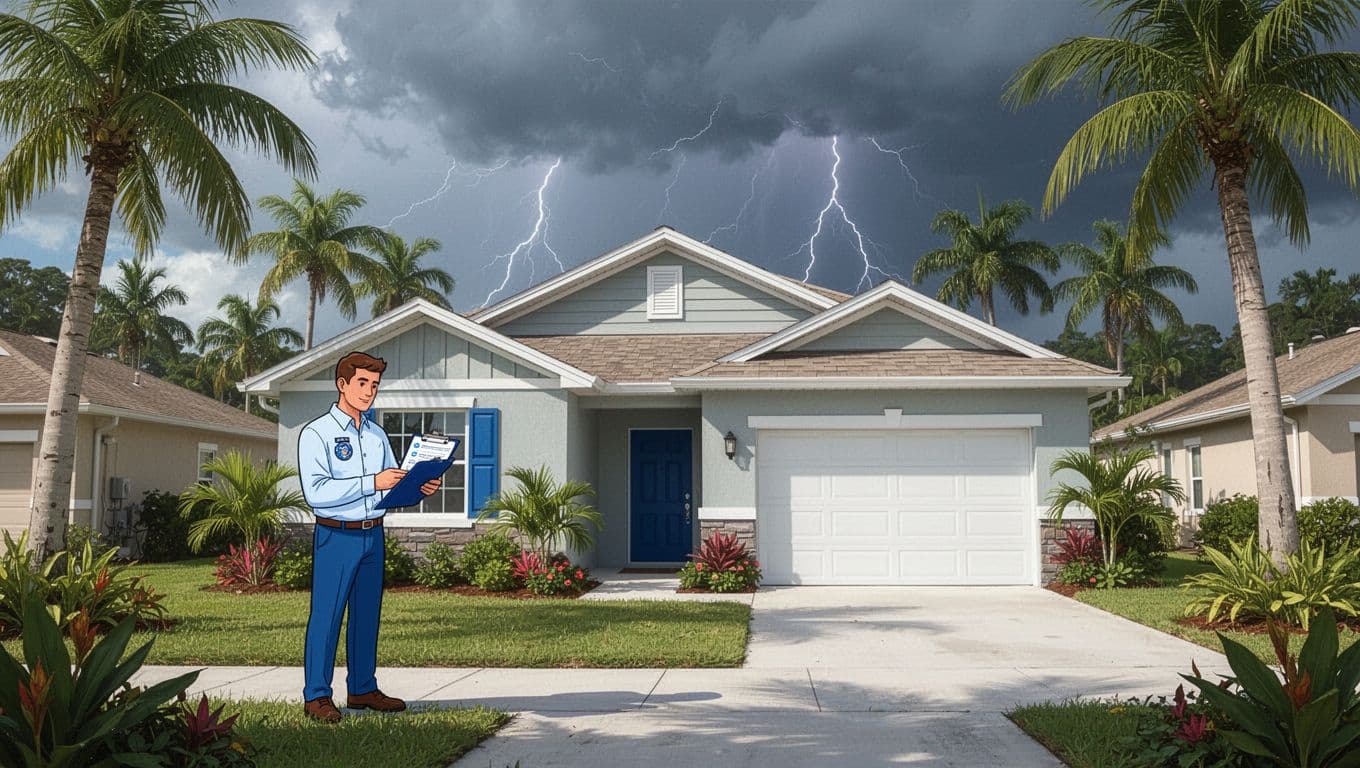
Florida rental owners need to review wind, hurricane, roof, and flood risks separately, including any hurricane deductible and roof deductible that may apply. Storms and other natural disasters can bring several types of damage, and one policy may not respond to all of them.
Buy Flood Coverage for the Actual Address
Standard Florida landlord insurance generally doesn’t cover flood damage. A flood insurance policy is separate from landlord coverage and may come through the National Flood Insurance Program, a private carrier, or both options where available.
Check the property’s FEMA flood zone, elevation information, drainage history, prior claims, and proximity to canals, rivers, lakes, and the coast, especially for coastal properties. The Florida Office of Insurance Regulation’s flood guidance provides state information, while NFIP FloodSmart resources explain federal flood coverage.
Don’t rely only on an old listing description. Request a current flood quote using the exact address, building details, foundation type, and replacement cost. Ask whether the policy covers the building, landlord-owned contents, cleanup, and any limits that apply to lower levels or detached structures.
Read Storm and Roof Deductibles Carefully
Florida policies often use percentage deductibles for hurricane claims. Ask how the hurricane deductible is calculated and whether the roof deductible is separate.
If a 5% hurricane deductible applies to a $400,000 dwelling limit, your out-of-pocket share could be $20,000. Ask whether the percentage applies to the dwelling limit or another basis, then model the roof deductible cost separately.
Compare the hurricane deductible and roof deductible with the following amounts:
- The all-perils deductible.
- The windstorm deductible.
- The hurricane deductible.
They may not be the same. Also ask whether the hurricane deductible applies to hurricane, windstorm, or another defined event. Request a roof deductible comparison if the policy treats roof claims separately.
Also ask whether the policy includes a separate roof deductible and whether roof claims are settled at replacement cost or actual cash value.
Roof age and condition can decide whether a private carrier offers coverage. Keep records that help the insurer evaluate the roof deductible, including the roof installation invoice, permit records, inspection reports, repair receipts, and recent photos.
A four-point inspection reviews the roof, electrical, plumbing, and HVAC systems, while a wind mitigation inspection documents storm-resistant features. Those features may qualify for premium credits, so ask whether either report affects underwriting or the roof deductible.

Price Coverage Using Property-Specific Numbers
What is the average cost of Florida landlord insurance? There isn’t one dependable statewide price. The address and construction details can change the quote significantly.
Build the Premium Into Your Investment Model
For rough planning, start with a property-specific insurance premium estimate. Actual premiums vary widely. Older, high-value, coastal properties, or rentals with poorly maintained roofs may cost much more than newer inland rentals.
The biggest pricing factors often include:
- County and distance from the coast.
- Roof age, materials, shape, documented condition, and the applicable roof deductible.
- Construction type, elevation, shutters, and wind mitigation features.
- Replacement cost, liability limits, claims history, and deductible choices.
- Pool, waterfront, canal, short-term rental, or furnished occupancy exposure.
- Vacancy, renovation status, and how often the property is occupied.
When we compare a rental in Lehigh Acres with a canal or pool home in Cape Coral, we don’t use one insurance allowance for both. The second property may attract stronger rent, but it can also bring higher wind exposure, pool service, seawall work, dock maintenance, and storm preparation.
Insurance belongs in the operating expense section of your cash flow model. Calculate effective rental income, then subtract operating expenses to find NOI. Next, subtract debt service and planned reserves, including likely storm costs tied to the hurricane deductible. A small increase in annual insurance can reduce cash flow more than a modest rent increase improves it.
Compare Private Quotes With Citizens
Citizens Property Insurance Corporation is Florida’s insurer of last resort. It’s intended for owners who can’t find comparable coverage in the private market, not automatically for every property with a high premium.
For many residential policies, eligibility can depend on receiving no comparable private offer or a private-market premium above 120% of the comparable Citizens premium. Check current citizens property insurance rules for private declinations and the 120% comparison rule. Replacement-cost limits and county exceptions can also apply. Review the official Citizens policy eligibility information before relying on a Citizens quote.
Request private insurance quotes first, then compare Citizens when the property qualifies; keep private declinations, quote pages, inspection reports, and underwriting correspondence in your records. Where it writes the specific risk, request a quote from security first insurance. Compare that security first insurance quote’s limits, exclusions, deductibles, and underwriting conditions with other offers. Citizens may also reject properties with unsafe conditions, significant structural issues, existing damage, or occupancy that doesn’t fit its rules.
Match Coverage to the Rental Strategy
The policy must match how you earn income from the property. Long-term occupancy, furnished housing, and vacation rentals can create different underwriting requirements.
Long-Term and Vacation Rentals Are Different Risks
A long-term rental usually offers steadier occupancy and simpler monthly forecasting. Confirm that the policy allows tenant occupancy for the lease term, covers loss of rents, and includes landlord-owned appliances or furnishings you provide.
Short-term rentals need extra care. Some standard landlord policies restrict transient occupancy or require written approval. Before listing a home on a vacation-rental platform, ask whether the use is covered or requires specialty coverage.
Don’t assume platform protection or airbnb insurance replaces your required policy. Confirm how any platform coverage coordinates with your policy and the property’s actual use.
Your financial model should include cleaning, furnishings, utilities, platform fees, local registration, seasonal vacancy, and higher turnover costs. Vacation-rental use may produce higher gross income in strong months, but insurance and operating risks can also be higher.
Keep Renters Insurance in the Lease
A lease can require tenants to maintain renters insurance, subject to applicable law and proper lease language. State the required liability limit, proof of coverage, renewal expectations, and what happens if the policy lapses.
Ask tenants to provide a declarations page rather than relying on a verbal promise. Owners should still maintain separate liability protection because tenant coverage may have exclusions, limits, or claim conditions that don’t protect the property owner.
Keep a Property-Specific Insurance File
Insurance decisions become easier when every property has a complete, current file. This also helps your property manager, lender, insurance agent, and maintenance team respond quickly after a loss.
Keep Documents Underwriters Want
Before requesting insurance quotes, gather the address, year built, square footage, roof age and material, construction details, prior claims, flood zone, occupancy type, and replacement cost information.
Keep these records together:
- Current declarations pages and renewal notices.
- Roof invoices, permits, inspection reports, repair records, and the current roof deductible.
- Four-point and wind mitigation reports.
- Photos or video showing the home’s condition before a claim.
- Private-market quotes and declinations for Citizens applications.
- Lease terms, rent records, and proof of tenant renters insurance.
- Service records for HVAC, plumbing, electrical systems, pools, and irrigation.
Review the Policy Before Every Renewal
Don’t renew on autopilot. Check whether the dwelling limit still reflects rebuilding costs. Confirm the loss of rental income limit matches current rent. Note any renovations or new features that changed the risk.
Review the hurricane deductible and roof deductible, along with pool screens, docks, seawalls, solar equipment, sheds, generators, and furnished contents. Confirm that the named insured, mortgagee, property address, management contact, and mailing address are correct.
We also recommend comparing the insurance premium with your cash flow model at each renewal. Rising costs, flood coverage, deductibles, vacancy, repairs, and reserves all affect the return your rental can produce.
Frequently Asked Questions
Does Florida require landlord insurance for rental properties?
Florida does not require every rental owner to buy a policy specifically labeled landlord insurance. However, mortgage lenders typically require property insurance, and owners remain financially responsible for damage, liability, and lost rental income if they go uninsured.
Does Florida landlord insurance cover flood damage?
Standard Florida landlord insurance generally does not cover flood damage. Owners should request a separate flood quote for the exact property address and confirm coverage for the building, landlord-owned contents, cleanup, and applicable limits.
What deductible should a Florida rental owner expect?
A policy may include separate all-perils, windstorm, hurricane, and roof deductibles. Percentage deductibles are often based on the dwelling limit, so owners should calculate the potential out-of-pocket amount and include it in their investment model.
Is a DP-3 policy the best choice for a Florida rental?
A DP-3 policy is often a useful starting point because it generally provides open-peril dwelling coverage subject to exclusions. The declarations page, full policy contract, and endorsements control the actual protection, so owners must still review flood, water damage, roof settlement, liability, and rental-income coverage.
Does landlord insurance cover short-term or vacation rentals?
Not always. Some standard landlord policies restrict transient occupancy or require written approval, so owners should confirm that vacation-rental use is covered or obtain specialty coverage before listing the property.
Final Thoughts for Florida Rental Owners
A strong Florida landlord insurance plan protects more than the house. It supports rental income, liability coverage, storm recovery, and the financial assumptions behind your investment.
Use the actual address, current roof records, separate flood and wind quotes, and clearly stated deductibles. When coverage matches the property and the numbers still work under conservative assumptions, you have a stronger foundation for long-term rental ownership.